Tuesday, February 5, 2013

Bomb, baby, bomb! ... another Western no-brainer

A Tuareg independantiste in Mali ... sidelined by the Salafi-jihadis.
Photo: Global Dispatches
Getting to know the imperial disaster in Mali: Apparently, it's a no-brainer [excerpt]

By Pepe Escobar,
an independent Brazilian investigative journalist and commentator

ONE has to love the sound of a Frenchman's Mirage 2000 fighter jet in the morning. Smells like... a delicious neo-colonial breakfast in Hollandaise sauce. Make it quagmire sauce.

Apparently, it's a no-brainer. Mali holds 15.8 million people - with a per capita gross domestic product of only around US$1000 a year and average life expectancy of only 51 years - in a territory twice the size of France (per capita GDP $35,000 and upwards). Now almost two-thirds of this territory is occupied by heavily weaponised Islamist outfits.

What next? Bomb, baby, bomb.

So welcome to the latest African war; Chad-based French Mirages and Gazelle helicopters, plus a smatter of France-based Rafales bombing evil Islamist jihadis in northern Mali. Business is good; French president Francois Hollande spent time last month in Abu Dhabi clinching the sale of up to 60 Rafales to that Gulf paragon of democracy, the United Arab Emirates (UAE).

Monday, February 4, 2013

'E-martial law' makes Facebook libel posting 'likes' crime in Philippines

Graphic: Philippine Daily Inquirer
By Tetch Torres in Manila

THE PHILIPPINES government has admitted before the Supreme Court that liking, sharing libelous Facebook and Twitter posts can make one person criminally liable, prompting a judge to say that it creates a "chilling" effect.

“It is not an excuse that thousands of defamatory statements are on the internet. Then, we have to scrap the law,” Solicitor-General Francis Jardeleza said during a hearing last week about the controversial Cybercrime Prevention Act.

A restraining order of implementation of the 2012 law - dubbed "e-martial law" because of its repressive restrictions on freedom of speech - had been due to be lifted today.

“Defamation is defamation whether we communicate through megaphones, letters, person to person, tweets, Facebook or e-mail,” Jardeleza added.

Associate Justice Roberto Abad said that with the criminal liability that the new law creates, “it will make me now reluctant to express my view.”

Sunday, February 3, 2013

RSF media freedom index warns on Fiji, PNG, praises 'Burmese spring'


An archive video of a Paris protest action by RSF over the violence against journalists in Syria. Video: RSF

THREATS to the media in the South Pacific should not be taken lightly in two Melanesian countries, says the Paris-based global press freedom advocacy group Reporters Sans Frontières.

Papua New Guinea has dropped six places to 41st in the latest RSF World Press Freedom Index with the security forces being "regularly involved in attacks on journalists".

 In Fiji, in spite of a 10-place rise to 107th - "explained in part by the decline of other countries in this section of the index, news organisations are threatened under the Media Industry Development Decree with exorbitant fines, or even imprisonment, as in the case of a recently convicted editor of The Fiji Times".

Elsewhere in the South Pacific did not rate a mention in the report, which highlighted the "Burmese spring" in the Asia-Pacific region.

But among other Pacific Islands Forum countries, New Zealand rose five places to eighth and Australia climbed four places to 26th.

Burma was an exception to decline in freedom of information in Asia.

Source: Pacific Media Watch 8187

The lies of Marc Edge, 'counterpropagandist'


BENJAMIN FRANKLIN once said that “half a truth is often a great lie”, but in the past few weeks the blog Fiji Media Wars has been treating readers to a steady smear campaign. Café Pacific publishes here a statement by journalist and media educator David Robie:

Canadian Marc Edge projects himself as a dispassionate scholar. In fact, he is a polemicist and “counterpropagandist” – as he admits proudly on his website – who has regularly used his position at a Pacific university over the past year and since to peddle self-serving disinformation. For those who wondered why I was departing from the usual editorial line of Café Pacific to make a rare personal public condemnation with my “Vendetta journalism” article last Wednesday, the answer is quite simple: To make the truth known.
"Counterpropagandist" - from Marc Edge's website, 3 February 2013.
Dr Marc Edge ... controversial
academic and blogger.
Photo: Wansolwara
When I heard Dr Marc Edge’s distortions on his Radio Australia interview late last month blaming Fiji’s military backed regime as the sole cause of his demise at the University of the South Pacific, I decided I could no longer remain silent. In my capacity as a regional journalism educator and journalist, I had the misfortune to cross paths with Marc Edge several times and over varied projects over several months at his university last year. I quickly learned he had his own personal agenda and little of it was to do with the truth or journalism education. In fact, I am now convinced that he never had the welfare of students or the USP journalism programme at heart. He merely wanted to use USP as a pawn in gathering fodder for his proposed “Fiji Media Wars” blog book to trash Fiji and portray himself as a media freedom “hero”. It backfired.

Indonesian border risks becoming 'flashpoint', warns Post-Courier

The two motorbikes and food rations left by Javanese poachers who
fled into the jungle when the soldiers and the team caught up with them
that morning along the banks of Torasi River.
Bottom insert:
The motorbikes were set ablaze by the PNGDF soldiers. Photos: PNGDF
Special report by the PNG Post-Courier's Haiveta Kivia and team

PAPUA NEW GUINEA'S inability to man its 760km land border with Indonesia and increasing tension triggered by cross-border raids from Papua and lack of economic opportunities could make the area a flashpoint, the PNG Post-Courier reports.

Wutung villagers in the West Sepik Province and locals from the Morehead local level government area in the Western Province have expressed concern at the lack of intervention by the relevant PNG government agencies to address their problems, the newspaper said in a front-page report in its weekend edition.

Three weeks ago, Wutung villagers forcefully pulled down the Indonesian flag in protest against Indonesia, compelling Waigani to dispatch a team of officials led by the PNG Foreign Affairs Department to the border region.

The lack of income earning opportunities in West Sepik and the allegations that the popular Indonesian-owned Bartas market was built on the PNG side of the international border appear to be key factors that threaten to trigger hostilities.

“We are getting a little money from the trading at the border but it is just about 5 percent and it would be nice if we can capture at least 30 percent of it,” said Patrick Muliale, the Wutung Onne Bewani local level government president.

Thursday, January 31, 2013

West Papua's realpolitik - the brutal struggle for independence


WHEN the Dutch decolonised their East Indies empire after the Second World War they handed it all to the emergent country of Indonesia - all except the territory of West Papua, which forms one half of New Guinea, the second largest island on Earth. This remarkable landmass - split neatly by colonial powers into West Papua and Papua New Guinea - is like few other places in the world.

Its mountainous terrain and dense rainforests have spawned extraordinary linguistic diversity among its indigenous population, some of whom are still in uncontacted tribes. Five decades ago few, if any of these tribes, showed any desire for their land to become an extension of Indonesia, a new nation state with which they shared neither history, culture, religion nor ethnicity, but which wanted resource-rich West Papua within its borders. 

The Dutch resisted Indonesia's demands for a while, beginning to invest in West Papuan education and encouraging nationalism. But eventually global realpolitik intervened in the shape of US President Kennedy. Concerned about the possibility of communism spreading across South and Southeast Asia, the Kennedy administration saw Indonesia as a useful regional ally that should be kept happy.

In 1963, with American backing, the United Nations gave Indonesia caretaker rights over the territory, on condition that a referendum on independence should follow. But when the poll - named, without apparent irony, as the "Act Of Free Choice" - took place in 1969 it was widely perceived as a sham.

Marc Edge, ‘international standards’ and the neo-colonial disaster that hit USP journalism

Dr Marc Edge ... "a caricature of colonial attitudes,"
according to some USP staff. Photo: Wansolwara
IN RESPONSE to this blog’s “Vendetta journalism” article and ousted former head of journalism Dr Marc Edge’s attack on David Robie, Café Pacific has received this anonymous feedback from inside sources, including staff and senior students, at the University of the South Pacific's Laucala Campus in Fiji:
LOOKING FOR SCAPEGOATS

FEEDBACK:
No journalism lecturer in USP journalism's 25-year history had racked up as many complaints as Dr Marc Edge did - and in record time. Now, he is desperately looking for scapegoats in an attempt to salvage a tarnished academic reputation and failed USP tenure, and lashing out at his perceived enemies.

After his antics at USP, only a very “brave” university would want to touch Marc Edge, although it seems that normally he is on his best behaviour while working at developed world universities; it is in developing countries that he develops a superior, know it all, colonial attitude, which made him a laughing stock at USP.

Many at USP regarded Marc as a caricature of colonial attitudes.  He made a lot of noise, created a lot of controversies and spent too much time on these. It was taking time away from teaching and affecting the students. This not only carried on for months, it only got worse. It was one of the reasons why he was asked to resign.

Marc Edge and the 'Pacific media puppetmaster'

Dr Marc Edge at Pacific Harbour, Fiji, before he outlived his welcome.
A POSTING from Marc Edge to Café Pacific. Marc who? Oh, the Canadian guy who recently headed the University of the South Pacific journalism programme and who self-destructed mid-way through his contract. And now he publishes the vengeful blog Fiji Media Bores (Wars). This is what he says in response to the Café Pacific article:
It will be obvious to all with the posting of this entry exactly what side David Robie is on. If I had any illusions that this comment would be posted (Robie controls comments closely) [A LIE] I would go on and on about how Robie has been not just complicit but a driving force in the smear campaign against me [ANOTHER LIE]. There are several reasons for this, from what I can tell. He couldn't stand the fact there was a media scholar in the region of equal or greater standing to himself who didn't assign his textbook [NARCISSISM] . He couldn't stand the fact that I didn't submit articles to his B-ranked journal [ANOTHER LIE]. But most of all, he didn't like anyone contradicting his theory that Fiji media have been to blame for the country's endless coups (instead the lack of rule of law is) and his support for media suppression there [YET ANOTHER LIE]. I was going to save this for the book, David. I had a whole chapter mapped out -- Pacific Media Puppetmaster. Now I guess I'll have to blog about it. Your choice.
Marc, sour grapes. Café Pacific says if you paid more attention to running a journalism programme and developing student journalists instead of indulging in conspiracy theories, paranoia, misrepresentations and bitterly attacking journalists, media academics and students around the region, you might have lasted the distance. Your smear allegation is untrue, along with the rest of your puerile claims - and just further laughable evidence of your credibility problem.

Marc's cheap shot characterisation of David Robie's media philosophy is distorted and wrong. Anybody interested in his actual views on "coups, media and human rights" should read this or watch this video. This blog is dedicated to media freedom and watchdog journalism and it has always been opposed to all coups and military-backed regimes in Fiji. Real journalists write about issues, not indulge in petty and nasty personal attacks, which comprise the bulk of Edge's blog content.

Wednesday, January 30, 2013

Marc Edge and his Fiji smear campaign

Image borrowed from Marc Edge's The Tyee article today ... "torched by
Fijian media politics" is the claim. Photo: Shutterstock
HARDLY SURPRISING that Dr Marc Edge, described in the Canadian news blog The Tyee as a journalism "professor" which he was certainly not in Fiji, should switch his smear blowtorch to Café Pacific publisher David Robie. Attack anybody to avoid being responsible for his own demise at the University of the South Pacific. With a quicklink to this blog's article on Fiji Today, Edge added an introductory comment alleging:
Robie has been behind the smear campaign from the start and supports media repression in Fiji.
Robie replies:
This laughable, paranoid and dishonest statement by Marc Edge is an example of why he has been such a joke in Pacific media education circles. For the record I have not been involved in any "smear campaign", but I have certainly been campaigning on Pacific media freedom issues for more than the past two decades or so and I have been opposed to all military regimes. Being founding co-convenor of Pacific Media Watch in 1996; author of several books, including Mekim Nius on Pacific media politics in 2004; and co-author of the Pacific's first regional media freedom report in 2011 are just among the many outputs. What has he contributed to the region other than being an armchair bleater?

Vendetta journalism and counterpropaganda, 'Fiji style'

Former USP journalism head Dr Marc Edge "on edge" at a Media and Democracy
symposium in Suva last September. Photo: Café Pacific
IN RECENT weeks, the Fiji blogosphere has run hot over attempts by the ousted former head of journalism of the University of the South Pacific, Dr Marc Edge, a self-styled “counterpropagandist”, to portray himself as some kind of martyr for the Fiji media freedom cause. His claims peaked with an allegation that he “feared my safety was in jeopardy” in a curiously lop-sided Radio Australia interview with journalist Bruce Hill.

However, Café Pacific today exposes another side of the story. It had been an open secret for months at USP and in media education circles around the Pacific that Dr Edge was on the way out after the shortest tenure ever of any expatriate journalism coordinator – barely serving half of a three-year contract. He was dumped after sustained and embarrassing complaints by students, colleagues and media academics in at least two other Pacific Islands Forum countries. The situation had become untenable for the Canadian lecturer as he was perceived to be “waging war” on his students. Initially, he was “relieved”  of his position as acting head of journalism with a humiliating public statement by USP management on November 14  and then he was gone from the faculty staff by Christmas.

Part of the USP statement about Dr Edge's "demotion" on November 14, 2012.
But there was no inkling of any of this in Bruce Hill’s Radio Australia interview on January 25. (Although Hill did ask Edge whether he had been dismissed or resigned and got a "cannot comment" reply). Nor did Hill put the obvious question to Edge about why he had used the Fiji Media Tribunal mechanism to file a controversial complaint against a local media organisation that he had been accusing of practising “self-censorship”  – conveniently using the very Media Industry Development Decree  he had been condemning for months. Edge blamed his demise at USP solely on the military-backed regime and Qorvis Communications, a US-based media spin company contracted to the Suva government, and ignored the journalism programme wreckage - his legacy:

Tuesday, January 29, 2013

Turkish writer's 15-year struggle for justice over the Spice Market 'bombing'

The court ordered a life sentence for Pınar Selek. Photo: Selek's Facebook Page
RECENTLY, Café Pacific reported on the fate of many journalists in Turkey after an otherwise invigorating visit to this fascinating country. But the number of journalists, many of them ethnic Kurds, languishing in prison on trumped up charges reveals a sinister side. So does this Global Voices story.

By Baran Mavzer

PINAR SELEK, a French-based sociologist and a writer, previously accused of bombing the Istanbul Spice Bazaar in 1998, has been sentenced to life in prison in Turkey.

The final verdict was delivered on January 24, 2013. If she returns to Turkey, she will be arrested by the police.

During her nearly 15 year-long trial, she was acquitted three times. She now lives in Strasbourg.

First arrest
Selek's long journey with the Turkish Judicial System began on July 11, 1998, just two days after the explosions at the entrance of Istanbul's Spice Bazaar. The explosion killed seven and wounded approximately 100 people.

Despite suspicions regarding the cause of the explosion being caused by a PKK (Kurdistan Workers' Party) bombing, six investigative reports indicated that the explosion was not due to a bombing or terrorist attack.

Sunday, January 27, 2013

Move over Taliban bogeymen, it's the turn of the Sahel's 'Afrighanistan'


FAR FROM STATE terrorism in the South Pacific, but the Sahel, a new Global war on Terror battleground now that the "Coalition of the Willing" has virtually lost the plot in Aghanistan, deserves reflection. Pontecorvo's 1966 The Battle of Algiers remains the classic counter-terrorism documentary and provides pointers to the contemporary Western mindset, such as displayed in Zero Dark Thirty about the decade-long hunt for Osama Bin Laden. Another excerpt from a "Roving Eye" column by Brazilian journalist and author Pepe Escobar in the Asian Times provides some insights. Café Pacific finds it extraordinary that Escobar's columns don't get a run anywhere in the Australian, NZ or Pacific media.

Zero Dark Mali [Excerpt]

By Pepe Escobar


Goooooooood morning, Vietnam! No, sorry, that was another quagmire.

The soundtrack then was Hendrix, Jefferson Airplane, Motown and Stax. Now it's Goooooooooood morning, Mali! Yet the soundtrack can't be something as transcendental as Rokia Traore's Dounia, or as delightfully psychedelic as Amadou and Mariam's Dimanche a Bamako. It's way more menacing. Something like - he's inescapable - Hendrix in Machine Gun.

Timing - as in the expansion of the Global War on Terror (GWOT) - is everything. Carefully choreographed Libyan blowback in the Sahel could not be a better replacement for NATO raising a monster white flag in Afghanistan. There's no Goooooood morning, Kabul! anymore; there's just the sorry countdown to see the last NATO helicopter leaving Bagram - Saigon 1975-style.

The Economist - the voice of the City of London - is even promoting "Afrighanistan". There are nuances, of course. NATO had its ass kicked in Afghanistan by all sorts of Pashtun factions bundled up as "Taliban". But NATO "won" in Libya.

With a certainly foreseen spin-off; the Islamist brigade which attacked the In Amenas gas field complex in the Algerian desert was using NATO-facilitated Kalashnikov AK-104s, F5 rockets, 60 mm gun-mortars and, in a nifty NATOGCC fashion touch, the "chocolate chip" camouflage Qatar handed out to the NATO rebels in Libya (yellow flak jackets with brown patches). What next, the cover of Uomo Vogue?

Thursday, January 24, 2013

A day in the jail life of Filipino NPA political prisoners

Eighteen political prisoners from Tagum City, Patin-ay in Agusan del Sur, Cebu and Taguig City on a hunger strike last July to underscore the call for the release of all political prisoners in the Philippines. Photo: Human Rights in the Philippines.
Last month, New Zealand law student Cameron Walker accompanied members of a Filipino prison welfare organisation on a visit to Tagum City Jail, near Davao, the largest city on the Philippines’ southern island of Mindanao. He reports here on his experience and interviews.

By Cameron Walker

AMONG Tagum City Jail’s inmates are 16 young men aged in their 20s and 30s who were members of the New People’s Army (NPA), the armed wing of the Communist Party of the Philippines (CPP).  Some of them have been wounded in combat.

During my visit, one detainee lifted his shirt to show a sizeable bullet wound on his stomach, which still needed further surgery.  Their movement has been fighting the Philippine government since 1969.

Mindanao is considered one of the movement’s strongest regions.  Local media often report armed encounters between the NPA and the Armed Forces of the Philippines, which have resulted in casualties on both sides.

The Communist Party, along with the other member organisations of the National Democratic Front of the Philippines (NDF) call for the implementation of a 12 point programme that includes genuine land reform, national industrialisation and upholding democratic rights.  They also demand an end to the extrajudicial killings of political activists by the Armed Forces and for the release of political prisoners.

The NPA is mostly based in rural areas.  It pursues the tactic of building up a strong base in the countryside, the area where the government is weakest, and fighting a protracted war.

In contrast, the Communist Party, which retains political control over the NPA, has a presence throughout the country, even in the cities.  The party is an underground organisation so members are unable to openly declare their affiliation.

As the Filipino journalist Benjamin Pimentel Jr wrote: a Communist cadre could be “…the guys sitting beside you in a jeepney, or the young women munching Big Macs at McDonalds”. (1)

Party cadres have important but less dramatic tasks than those of NPA fighters.  They write reports, prepare new policy, solicit funds and provide guidance to other cadre, amongst other responsibilities. (2)

Wednesday, January 23, 2013

Fiji's 'rocky ride' back to democracy - a media opportunity?


DAVID BEATSON’S wide-ranging and perceptive current affairs programme Interview was back on Auckland-based New Zealand independent community broadcaster Triangle TV this week. He featured the latest setbacks to the return to democracy in Fiji. Describing the situation as Fiji’s “rocky ride” to democracy, Beatson interviewed Pacific Media Centre director Professor David Robie. Among other interviews this week, Robie also talked to Radio NZ International’s news editor Walter Zweifel, welcoming an apparent “opening” in the Fiji political debate in the media in spite of censorship in recent years:
A leading New Zealand journalism educator says it is auguring well for Fiji’s future that the media has broadened its coverage of political affairs. 
Working under the tough terms of a number of decrees, Fiji media outlets largely ignored the criticism of the regime decision to dump the draft constitution which it had commissioned last year.
That prompted the Fiji Labour Party to claim that the local media only regurgitated the regime’s platitudes without looking at the accuracy of the statements.

Professor David Robie, who is the director of the Pacific Media Centre at AUT University, says days later after the regime released a decree on political parties, coverage improved.

“When it brings in a decree like this on political parties and expects one political party to dance to a tune of accountability and yet not provide that accountability itself, that seems to have opened the flood gates of open criticism and debate.”

Professor Robie says to have a genuine democracy in 2014, there needs to be a proper political debate, and the media is critical for this.
Meanwhile, Triangle TV will soon be launching a new public broadcasting channel Face Television on Sky and it plans to host a new current affairs programme, Public Interest, presented by Pacific Scoop and Scoop Media former co-editor Selwyn Manning. According to Manning, Public Interest is committed to “analysing issues” at a time when in-depth and investigative programmes are in retreat in New Zealand.  

“Public Interest is about promoting ideas that progress New Zealand’s bicultural society while empowering our communities and peoples to reach their potential.”

Strong independent Pacific content is expected to be a feature.

Tuesday, January 22, 2013

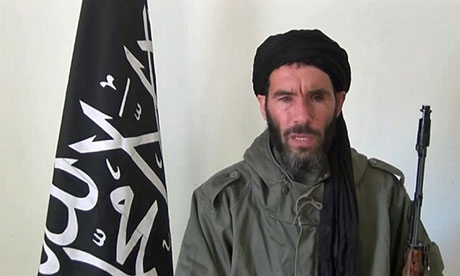
'Geronimo' Belmokhtar and the Algerian Global War on Terror chapter

'Geronimo' Belmokhtar is already rehearsing for his cameo
appearance in a Zero Dark Thirty sequel. Photo: France24
CAFÉ PACIFIC is slightly off its usual Pacific track over the Algerian hostage crisis but, given France's role in state terrorism in Oceania and nuclear testing (this began in the Sahara desert), it is interesting to follow Brazilian journalist Pepe Escobar's "unwestern" articles in the Asian Times. His robust column, The Roving Eye, provides a devastating critique of self-serving Western policies - a refreshing contrast to the media spin in this part of the world. For example, in the wake of new warlord French President François Hollande's adventure in Mali and the jihadist raid on the vast In Amenas gas plant, where does Algeria fit in the overall scheme of things?

According to Escobar, the Algerian military's ultra-hardcore response to the Islamist raid was predictable - "this is how they did it during the 1990s in their internal war against the Islamic Salvation Front":
We don't negotiate with terrorists; we kill them (along with scores of hostages). We do it by ourselves, without nosy foreigners, and we go for total information blackout.
 THE ROVING EYE [an excerpt]

War on terror forever

By Pepe Escobar


And the winner of the Oscar for Best Sequel of 2013 goes to... The Global War on Terror (GWOT), a Pentagon production. Abandon all hope those who thought the whole thing was over with the cinematographic snuffing out of "Geronimo", aka Osama bin Laden, further reduced to a fleeting cameo in the torture-enabling flick Zero Dark Thirty.

It's now official - coming from the mouth of the lion, Chairman of the Joint Chiefs of Staff General Martin Dempsey, and duly posted at the AFRICOM site, the Pentagon's weaponised African branch.
Exit "historical" al-Qaeda, holed up somewhere in the Waziristans, in the Pakistani tribal areas; enter al-Qaeda in the Islamic Maghreb (AQIM). In Dempsey's words, AQIM "is a threat not only to the country of Mali, but the region, and if... left unaddressed, could in fact become a global threat".

With Mali now elevated to the status of a "threat" to the whole world, GWOT is proven to be really open-ended. The Pentagon doesn't do irony; when, in the early 2000s, armchair warriors coined the expression "The Long War", they really meant it.

Even under President Obama 2.0's "leading from behind" doctrine, the Pentagon is unmistakably gunning for war in Mali - and not only of the shadow variety. General Carter Ham, AFRICOM's commander, already operates under the assumption Islamists in Mali will "attack American interests".


Sunday, January 20, 2013

'We have come to exterminate the Crusaders' - Algerian hostage crisis background


Al Jazeera news video.

"WE HAVE come to exterminate the Crusaders", said a freed Algerian worker at the In Amenas gas field. He described on Al Jazeera television how the the Islamic jihadists searched the Sahara desert installation looking for foreign workers and planned to blow up the entire plant.

The hostage crisis had a deadly end at the weekend with the second and final assault by Algerian special forces but the bloody saga has cast a shadow over the country’s energy sector, according to the latest report published by the International Energy Agency (IEA). The preliminary death toll from the four-day siege was 23 hostages and 32 captors with five of the militants being captured. The army freed 685 Algerian workers and 107 foreigners.

France24.com has taken a closer look with Sébastian Seibt reporting:
The hostage incident has indeed caused a halt in activity at the site, where both gas and 50,000 barrels a day of liquid hydrocarbons similar to crude oil are produced.

Compared to the 1.18 million barrels of crude oil produced daily by Algeria, the production at the gas field seems relatively insignificant.

“It can create a bit of volatility, but one attack in itself is not going to lead to a long-term price hike,” said Céline Antonin, an economist specialising in oil industries at the French Economic Observatory.

The risk is that the terrorists’ “ability to strike so boldly is likely to spook the Western oil operators who run facilities across the region”, according to British weekly magazine The Economist. If oil operators get jittery, The Economist assessed, speculation could result in higher prices.
>> Read more
Stop press:  At least 37 hostages died in the terrorist seizure of, and ensuing special forces assault on, a natural gas plant in Algeria, says the country's prime minister. Five other hostages are missing from the In Amenas complex and could be dead, Prime Minister Abdul Malek Sallal said. Before Sallal's statement on Monday, other countries and companies that employed foreign workers at the sprawling plant had confirmed a total of 29 hostage deaths. - CNN

Thursday, January 17, 2013

Kiribati state silence stalls independent publisher

LAST MAY, Café Pacific challenged the "gagging tactics" of President Tong's government over an upstart newspaper in Kiribati. For more than five months avoided granting a publication licence to the Kiribati Independent, regarded as an "opposition" voice. It was ordered to close until licensed. Finally, police intimidated the newspaper by visiting the office. Declaring it was acting legally by publishing the small-circulation paper pending government green light, editor and publisher Taberannang Korauaba decided to suspend publication "indefinitely" while awaiting the paperwork to be sorted out.

Unfortunately, the patience of the newspaper team - which concentrated on the Auckland-based web edition instead - hasn't paid off. For the past six months, the Kiribati Independent has been stonewalled with silence by the Communications Ministry. Korauaba and two of his staff have lately been making available copies of a limited circulation publication by email to free subscribers. This is what Pacific Media Watch reported today on the topic:
     “We are publishing with a view to updating our readers with news from NZ and Kiribati,” Korauaba said.

    “Also, the idea is to keep doing our job and to see if we can get advertising to pay for the writers in Tarawa.

    “I have also decided to launch a weekly news service and to sell our stories to stations that are interested in buying our English-language news every week.”

    Korauaba has published the Auckland-based Kiribati and Tuvalu for the two communities and income generated from advertising has been maintain reporters in Tarawa.

    Early last year the Paris-based Reporters Without Borders wrote a formal protest to the Kiribati government in support of the Kiribati Independent when the Communications Ministry failed to issue a publication licence.

    Last June, police visited the paper’s Tarawa office and the newspaper ceased publication while awaiting a licence.

    Since then, the newspaper has had no communication from authorities.

    Other media freedom groups - including International Federation of Journalists, Pacific Media Watch, Pacific Media Centre and Pacific Freedom Forum – also appealed last year to the Communications Ministry to grant the newspaper a licence without political interference.

    It is believed that the newspaper's sole distributor was intimidated by police inquiries and staff have been subjected to threatening anonymous emails.

    The newspaper's legal advice at the time was that the law had not been broken.

    The Kiribati Independent was the fourth newspaper in the country, published fortnightly and had a circulation of about 500. It was printed by the Catholic Church's Maria Printers.

Wednesday, January 16, 2013

New Zealand Story - a Greenpeace tribute to the 'Kiwi way'


New Zealand Story

By Steve Able


With the new Rainbow Warrior 3 in New Zealand this month, we’ve been thinking about the Warrior’s place in New Zealand history in the context of reflecting on our national character.

With some help from Perendale Productions we’ve made a short 2min video, which we’ve called New Zealand Story. It includes references to more than 30 people and events in New Zealand’s history that all, in some way, embody the best of the New Zealand character. It is far from exhaustive, but, touches on just some of those who have defined our country and its spirit and characterise our historical ability to overachieve in a uniquely Kiwi way.

As the new year rolls on, we hope New Zealand Story might prompt us all to reflect on the sort of country we want to be and how we collectively write the next chapter.

Tuesday, January 15, 2013

Syria a graveyard for news workers amid conflict


A BELATED word of congratulations to Mazen Darwish, head of the Syrian Centre for Media and Freedom of Expression (SCM), and the Afghan daily 8Sobh, who were jointly awarded the 2012 Press Freedom Prize by Reporters sans frontières, Le Monde and TV5Monde.

Although there were many outstanding nominees, the awards jury paid tribute to Darwish, who “displayed extraordinary courage” in the face of danger and paid with his freedom.

RSF continues to demand his release by Syrian authorities.

Mazen Darwish ... held incommunicado
by Syrian authorities. Photo: AI
Darwish was arrested by Syrian Air Force intelligence agents on February 16 during a raid on the SCM office. He has been held incommunicado ever since.

At the time of his arrest, he was a key source of information when most foreign journalists were barred.

He has also reported to have been badly tortured and his health is suffering because of lack of treatment for a medical condition.

Syrian officials have refused to disclose his whereabouts or bring him before a judge.

Winner of the media freedom category, Afghanistan's 8Sobh (8 am), was described by the award jury as “living evidence that freely reported quality journalism can develop in the most difficult corners of the planet”.

Noting the horrendous global journalist death toll during 2012 - reported by RSF as 88 , The Guardian’s Roy Greenslade wrote on his blog:
At least 17 journalists, 44 citizen journalists and four media assistants killed in 2012 during the conflict between Bashar Al-Assad's government and various rebel groups.
Syria has hit news providers hard because they are the unwanted witnesses of atrocities being committed by the regime and armed opposition groups.
Due to the polarisation of information sources, news manipulation, propaganda, technical constraints and the extreme violence to which journalists and citizen journalists are exposed, anyone trying to gather or disseminate news and information in Syria needs a real sense of vocation.
Of growing concern is the number of Al Qaeda factions reportedly involved in the rebel forces (as happened in the Libyan version of the so-called “Arab Spring”). This is exposed in the above video.

In an attack on a Sahara desert gas plant by Al Qaeda and the killing of hostages in a shoot-out with Algerian troops on January 16, it was reported: "Western and African allies who fear that al Qaeda, flush with men and arms from the defeated forces of Libya's Muammar Gaddafi, is building a desert haven in Mali, a poor country helpless to combat fighters who seized its northern oasis towns last year."

Monday, January 14, 2013

Underground video in Cappadocia


CAFÉ PACIFIC was on hand for this recent "underground video" - in a Cappadocia cave in Ürgüp central Turkey. Kervansaray, or caravanserais - “caravan palaces" were built in the tenth century in medieval Seljuk Turk times as staging posts for the Silk Road camel trains. New Year light relief from the usual media politics on this blog - far from the Pacific.

>>> Popular Café Pacific Posts