Wednesday, April 6, 2011

People power prescription to cure the trans-Pacific free trade 'disease'


Bugs Bunny - alias a well-known local unionist - at the Rogers ... Photo: Nigel Moffiet/PMC

MURRAY HORTON, organiser and spokesperson for the Campaign Against Foreign Control of Aotearoa (CAFCA), treated Auckland to a double billing this week – well, actually a threesome if you count little Waiheke Island as well. His Christchurch-based movement has been campaigning to "expose and oppose" all aspects of foreign control of New Zealand for four decades. An impressive track record. And quality research that backs up the movement’s advocacy – leaving most news media floundering in its wake – is available on the websites www.cafca.org.nz and publication Foreign Control Watchdog, which is at www.converge.org.nz/watchdog.

Horton’s first star billing for Auckland’s advocacy faithful was at the annual Roger Awards – the Oscars of the global transnational notorieties and their murky impact on the New Zealand economy and justice. Chief culprits for 2010:

1. The Hobbit affair trioWarner Brothers (received by none other than Bugs Bunny and the third time a media corporation has won the “worst transnational” prize), with the John Key government collecting the Accomplice Award for “caving in” to the movie moguls and film director Sir Peter Jackson taking out a special Quisling Award for being the New Zealander who “did the most to facilitate foreign control” in the country.
2. British-owned BUPA "couldn't care less" retirement home company
3. Imperial Tobacco – for its “despicable” and “deceitful” third-party PR campaigns.

The film studio threatened to make The Hobbit in another country after Kiwi contract workers began collective agreement discussions and the corporation forced a controversial deal that kept the $670 million production in New Zealand. The government agreed to give the film studio an additional $20 million tax break and change the law so there would be no possibility that contract workers could go to court and claim employee rights.

According to the judges panel, headed by Banks Peninsula writer and researcher Dr Christine Dan and including a trade unionist, an associate professor and another senior academic and former Green Party MP Sue Bradford: Warner Brothers "significantly outscored all the other finalists in interference in New Zealand politics and governance. No other corporation has been given such a red carpet treatment when it came to interfere in the way we do things here ..."

The report went on to cite one of the judges saying “an overt display of bullying that humiliated every New Zealander, and deliberately set out to do that”.

The following night, Horton was again in action - this time kicking off his “NZ NOT for sale” campaign with a seminar speech at AUT University’s Pacific Media Centre. After a devastating critique of the Trans-Pacific Partnership Agreement (TPPA) and NZ’s shameful role in it, he prescribed a dose of"people power" as the remedy for the secret free trade deal “disease”:

Important as it is to lobby politicians and generally engage with that whole parliamentary process, that is a top down and essentially passive approach, asking our elected representatives to actually represent us. You don’t need me to spell out the whole history of betrayal, sellouts, compromises, and flat out lying that has involved in the past. So it’s not enough to trust politicians to do it for us, or even rely on a change of government to make it all good. We have to do it for ourselves, we need some People Power in New Zealand.

We’ve seen it in spectacular action in the Arab world this year but they are very different societies. Within our country we have seen the most magnificent grassroots mobilisation and community action in response to the seemingly never ending earthquakes crisis in Christchurch. There we witnessed ordinary New Zealanders – students, farmers, women, workers, the unemployed, brown, white – take charge of things in their own streets, neighbourhoods, suburbs and city, rather than helplessly waiting for somebody else to do something about it. Just to single out one group – I speak as a student activist from decades ago, and one who was cynical about the calibre of “today’s young people”.

I stand in awe of the Student Volunteer Army which mobilised somewhere between 10,000 and 20,000 students to get stuck into the most basic of tasks, namely digging the city out from under the ocean of silt, and muck and shit that engulfed it. Now, what I’m talking about is an emergency response to a life and death catastrophe, and not what is commonly perceived to be a “political” issue. But there is nothing more political than spontaneously organising people at the grassroots level to take control of their own communities. New Zealanders care very deeply about their communities and our country, despite the best efforts of the ideologues to turn us into a dog eat dog society. That people power is a truly formidable force ....

We’re confronting the most powerful institutions in this country and in the world, but we’ve beaten them before and we’ll beat them again. They’re the ones who have to hide inside a fortress of secrecy and lies. We have nothing to hide and the truth is on our side. We are many and they are few.

Kia kaha manawanui!

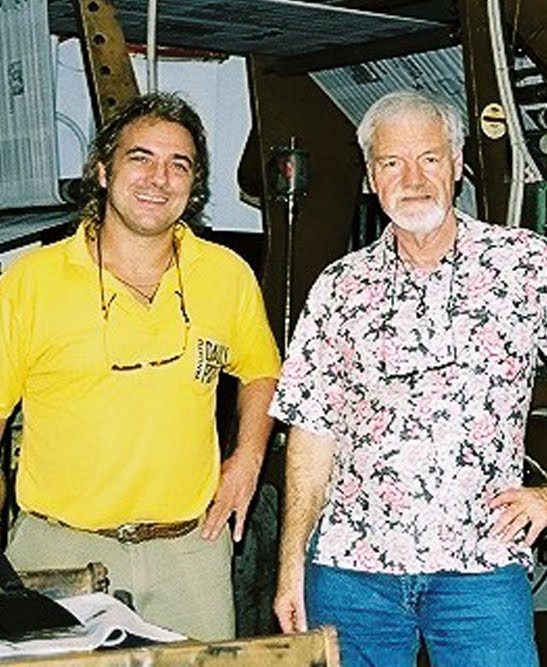
Pictured: Sir Peter Jackson and a Hobbit; Murray Horton at the PMC. Photo: Del Abcede/PMC

Saturday, March 26, 2011

Libyan intervention - two views from contrasting camps


WAS there any real justification in the devastating intervention in Libya - initially French, British and US-led and now with NATO driving? Is there really a moral case for this "no-fly zone" sham? Is it really all about saving civilian lives, or blatantly ensuring a regime change with control of oil once again the bottom line? There is a long list of countries that probably deserved foreign intervention in recent years, but were simply ignored with fossil fuels not being a critical factor: Somalia and international piracy, Ivory Coast, Sudan and Zimbabwe just to name a few. All left in the dustbin of Western hypocrisy. Here are some contrasting views from two columnists - Gordon Campbell on Scoop and the London Daily Mirror's Tony Parsons. Campbell contrasts the Libyan and Iraqi scenarios, defending the attack on Libya while condemning the invasion of Iraq, but Parsons brands the British involvement in Libya as simply "insane". Campbell writes:
Was the intervention in Libya justified – and if so, does that mean the invasion of Iraq in 2003 was justified? The conditions laid down by the French for their participation in enforcing a no-fly zone over Libyan air space go some way to answering those questions. Before they would join in any military action in Libya, the French were asking for (a) a clear UN resolution for the intervention(b) it had to be a UN operation, not one led by NATO (c) there would have to be some Arab involvement in the force, however token and (d) there would have to be a direct request and support for that intervention from a significant part of the civilian population.

Image: Tim Denee


France’s stance is relevant not simply because it is one of the thre
e main partners in the military force now attacking Libya. In 2003, it had been the most articulate opponent of the US invasion of Iraq, for reasons set out in this speech to the UN in 2003 by its then Foreign Minister Dominique de Villepin. All the conditions France have asked for in 2011 stand in striking contrast to the Iraq situation – which had no valid UN mandate, was a unilateral American-led adventure, had no Arab participation, and was in response to no direct threat to the people of Iraq, unlike the direct threat being posed to the people of Benghazi.

The immediacy of the murderous threat that Colonel Gaddafi posed to the civilian populations in the Libyan towns and cities that contain the rebels mark the main difference from the situation in Iraq. Without that immediate threat, the rationale for military action to topple the tyrant in Libya sounds almost identical to the Bush administration’s justification for intervening to topple the tyrant in Iraq.
Parsons in the Mirror says that if British prime minister David Cameron "had to send his kids to war, we'd all live in peace". In his latest column, he wrote:
It costs £900,000 for every Tomahawk missile ­– I am so glad we didn’t waste all that money on something stupid.

Oh, what a stupid war. Oh, what a dumb Britain. Stark raving mad – a country with empty pockets starting another open-ended, multi-billion pound conflict when we haven’t even finished the last one.


Are we insane? Have we learned nothing?


A country that can’t afford to police its own streets acting as though it can police the world. A country that is cutting back on military spending sending its ­undermanned, ­overstretched forces off to fight some more.


A country that can’t take care of its old people taking on the burden of caring for the oppressed people of Libya. A country that is currently closing down day centres for disabled children deciding it can afford another conflict that will waste millions every single day.


Barmy. Yet somehow so easy to understand. Thatcher, Blair and now Cameron – they all found it impossible to ignore the ­seductive call of war.


How much more satisfying it must be to confront the likes of General Galtieri, Saddam Hussein and Colonel Gaddafi than to deal with the problems of rising unemployment, soaring inflation, failing schools, housing ­shortages, a stagnant economy and all the rest.


Thatcher set the tone for the modern British Prime Minister. A nice little war can define your entire career. It’s far easier than creating jobs, wealth, hope.
But Parsons reckons that Thatcher had at least an achievable - and winable - goal. And he is decidedly nervous about a crop of "soft" politicians with little appreciation of the devastation of war; who can decide so casually on a warmongering path.
As I have noted before, it is terminally dangerous to have an army, navy and air force commanded by politicians who have never heard a shot fired in anger.

Tuesday, March 15, 2011

Band of 50's nuclear last stand at Japan's Fukushima


AS 120,000 people were ordered to stay in indoors and a further 70,000 evacuated from the 30km danger zone in northern Japan around stricken Fukushima Daiichi nuclear power station today, thoughts turned to the 50 volunteers who will probably pay a high price for trying to save the country from an even greater catastrophe. Their sacrifice follows the devastating 9.0 magnitude earthquake 120km off the east coast of Honshu on Friday, followed by an apocalyptic tsunami that swept an estimated 6500 people to their deaths. The technicians, soldiers and workers have been described by two journalists of The New York Times as the "faceless fifty". They remain unnamed. One newspaper branded them the "atomic samurai". However, just as this item was being published, it has been reported that even this group has now been ordered out of the danger zone after new radiation spikes. They later returned.

Keith Bradsher and Hiroko Tabuchi's dispatch from Tokyo headlined "Last Defence at Troubled Reactors: 50 Japanese Workers" began like this:
A small crew of technicians, braving radiation and fire, became the only people remaining at the Fukushima Daiichi nuclear power station on Tuesday — and perhaps Japan’s last chance of preventing a broader nuclear catastrophe.

They crawl through labyrinths of equipment in utter darkness pierced only by their flashlights, listening for periodic explosions as hydrogen gas escaping from crippled reactors ignites on contact with air.

They breathe through uncomfortable respirators or carry heavy oxygen tanks on their backs. They wear white, full-body jumpsuits with snug-fitting hoods that provide scant protection from the invisible radiation sleeting through their bodies.

They are the faceless 50, the unnamed operators who stayed behind. They have volunteered, or been assigned, to pump seawater on dangerously exposed nuclear fuel, already thought to be partly melting and spewing radioactive material, to prevent full meltdowns that could throw thousands of tons of radioactive dust high into the air and imperil millions of their compatriots.

The company continued to fight problems in several reactors on Wednesday, including a fire at the plant.

The workers are being asked to make escalating — and perhaps existential — sacrifices that so far are being only implicitly acknowledged: Japan’s Health Ministry said Tuesday that it was raising the legal limit on the amount of radiation exposure to which each worker could be exposed, to 250 millisieverts from 100 millisieverts, five times the maximum exposure permitted for nuclear plant workers in the United States.

Wednesday, March 9, 2011

Memo to PINA – get your Vanuatu facts right


SO PINA finally came to the party, after days of Pacific journos asking around the region’s traps why hasn’t the main media organisation taken up the cudgels of media freedom? Yet again? PINA finally acted four days after the March 4 brutal political attack and assault on Vanuatu Daily Post publisher Marc Neil-Jones. The publisher plans to take a private prosecution against Public Utilities Minister Harry Iauko and the “gang of eight” henchmen, who were allegedly led by the politician in the attack, if the police fail to act.

Current PINA (Pacific Islands News Association) president Moses Stevens is also from Vanuatu, but Stevens and Neil-Jones have been feuding for years. PINA should have been at the forefront of the Pacific protests. Instead, it wagged the tail.

Auckland-based Pacific Media Centre made a statement on Saturday as soon as the front page of the Daily Post had been sighted, branding the attack as “mindless brutality”, the Cook Islands-based Pacific Freedom Forum followed on Sunday with condemnation. Then followed the International Federation of Journalists, Reporters Without Borders and Samoa-based Pasifika Media Association on Monday with Fiji-based PINA and the Media Asosiesen blong Vanuatu (MAV) bringing up the rear on Tuesday.

Even then there was a grudging sting in Stevens’ statement with a reference to alleged “biased reporting”. Here, Neil-Jones, holds PINA to account for its attempt at qualifying the seriousness of the attack.
THANKS TO PINA AND MAV

By Marc Neil-Jones

I have today sent the following email to Moses Stevens thanking him for his PINA statement of support. I have also thanked MAV for their support.

Much appreciated Moses. Despite our differences, this
assault is an outrage and Iauko should be sacked. I thank you for PINA support despite us not being members currently.

One thing in relation to your press statement on Iauko's allegation of “bias” [in] reporting. The “news” he
reacted to on Friday was Transparency International's weekly opinion column which is vetted by lawyers and based on their own investigations into corruption. It is an opinion piece based on fact and documentary evidence in their investigations, vetted by a qualified lawyer. Same as the two opinionated letters to the editor [published] on that same day voicing anger and irritation over Iauko's actions in suspending the Airports Vanuatu board. My article earlier in the week on him suspending the AV board did not need comment from him as I had a copy of his letter to the board suspending them and I spoke to two board members and the expat adviser who had been told not to come into the office, all of whom confirmed what had happened.

I was shown the letter from Iauko. I was asked to investigate the legality of it and this was where the news thrust was as Iauko as Minister of Public Utilities is only a 50 percent shareholder in Airports Vanuatu and the Minister of Finance has the other 50 percent. I received advice from our lawyers his action was illegal if he had not got the support of Moana Carcasses. I called Moana and he confirmed that he knew nothing about it, had not been contacted by Iauko before he sent letters out suspending the board over allegations of malpractice and that Iauko could not do anything without his support and that what he had done was not right.

News hook
That was the news hook. I had proof the letter had been sent without any approval from Carcasses.


I didn't need to contact Iauko as he couldn't deny it as I had the letter. It was not “bias” in any way and just because we write about a minister if we are basing the story on documentary evidence, eg Joe Ligo's official report on corrupti
on in Lands while he was Director-General of Lands and had the power to get any file, document or staff he needed to do a thorough investigation for a report requested by the PM. He was the most senior civil servant in lands when he did the investigation and report, which is why it is so damaging. I simply quoted direct from the official report and raised questions on why tenders hadn't been followed that resulted in Kalsakau getting land without a tender for 1/10th of its value.

The government could have got vt50 million but they got next to nothing. I accept VBTC [Vanuatu Broadcasting and Television Corporation] would have to get “the other side” in order to put them in the best possible light as they are owned by government but we do not need to, provided ethics are followed and the news item is based on fact and not opinion. If Iauko had a problem with Transparency International's criticism of him, he should have taken it up with them or take them to court in the normal way.

You have in fact inferred that we were “biased” and have asked for more balanced reporting. This seems to be agreeing with the minister and you voicing your concerns. I have issues with that as the news on Iauko was perfectly good, followed standard journalism practice and was no excuse for him breaking the la
w and clearly breaching the Leadership Code.

Transparency International are a very well known NGO fighting corruption and Marie-Noelle Patterson has a huge reputation following her years as
Ombudsman. I have no problem whatsoever with their opinions and we do not need permission from Iauko or his comment before we run the column or a letter to the editor. I hope you can see this Moses.

Assaulted a number of times
For your information, I have been assaulted a number of times and no
t twice as is being claimed. Correctional Services with Jackson Noel a couple of years ago which has not gone to court; Christopher Emele's family with two men and two women when I was breaking news he didn't like on the VMA; assault and rough handling by the police when I was thrown in jail for demanding an officer who assaulted Sam Taffo at a rugby game between [the Police team] and USP [University of the South Pacific] be suspended; assault by Morkin Steven when he was Minister of Finance at Trader Vics, when he reacted to news of his drunken behaviour and car crash was carried.

I let that go as he profusely apologised afterwards. I was also assaulted by one of Willie Jimmy’s boys over a news item on a court case involving Willie that was in the paper when I was having a friendly conversation with Willie Jimmy at Club Vanuatu. If you recall, Willie then called up and told me to keep him out of the story or he would come and smash the office up - and I refused.


Sabby Natongs sent his boys in when we broke the news of his private security force assisting the VMF. He reacted and tried to stop us printing and I was assaulted. He made me do a custom ceremony at Blacksands and invited VBTC radio and TV to cover my apology.

A year or two later, Natapei as PM admitted in Parliament that Tanna boys under Sabby were helping the VMF and now Sabby even advertises it. He used custom against me when the paper was accurate all along. There have been other minor instances in the 1990s I have forgotten about. Brain cells tend to go when you are hit around so much!


Health issues
At 53 years of age and an insulin dependent diabetic with health issues [and] not writing much, how bad does this look when Iauko needs to come in [a
nd] bash an older guy with eight other people. If he was a real man he would come by himself as I am a lot older and weaker than him.

This clearly isn't right and my problem now is that I am highly cynical of whether the police and female Public Prosecutor will have the balls to take Iauko to court or not.
They haven't with my past two assaults.

Marc Neil-Jones
Publisher
Vanuatu Daily Post

Port Vila
Images: Top: Marc Neil-Jones (centre) and staff; PINA president Moses Stevens. - Pacific Scoop. Middle: Marc with Café Pacific publisher David Robie in the press room during better times. - Photo: Del Abcede/PMC

SIGN THE STOP VIOLENCE AGAINST JOURNALISTS IN THE PACIFIC PETITION

Tuesday, March 8, 2011

Vanuatu's 'gang of brutes' and climate of impunity


DEVASTATING. This was the withering attack in an editorial by the "the board" of Transparency Vanuatu against disgraced Infrastructure and Public Works Minister Harry Iauko. Under fire from all media and civil society quarters, but mostly from Transparency (TV), the minister should fall on his sword and quit politics. But it will never happen. Will Prime Minister Sato Kilman sit up and take notice, let alone purge his thuggish minister? Hardly. His majority is too slender. Self interest is the name of the game. The Vanuatu politicians will close ranks and shield their rotten apple.

This climate of impunity in the Pacific for attacks against journalists and media is outrageous. Fortunately, we don't yet have anything like the media casualty rate of the Philippines where impunity is a national disease. The region and newshounds have much to thank TV for - tirelessly led by former Ombudsman Marie-Noelle Ferrieux-Patterson, who is just as successful a scourge of corrupt politicians in her civil society role as she was in public office. She is an inspiring example of how news media and civil society agencies can work together to bring politicians to account. The editorial began:
"The scandalous physical attack (a crime under Vanuatu’s Penal Code) on the Daily Post publisher, Marc Neil-Jones, allegedly instigated by the Minister of Public Works, Harry Iauko Iaris – the latest in a line of reported accusations of unwise or corrupt actions by the minister – is definitive proof that Iauko is totally unfit to hold any public office, let alone a leadership position.

"It is clear from letters to the editor that the conduct of this minister, whose daily life is paid for from public funds, is a shameful embarrassment to the people of Vanuatu. As a minister of State, Mr Iauko represents the whole country, not just his own small group of voters.

"If the Sato Kilman government wants to retain any serious credibility, swift and decisive sanctions will need to be taken against Minister Iauko.

"Instead of the political maturity that we should have the right to expect from our government ministers 30 years after Independence, we are witnessing the sickening display of a gang of undisciplined brutes …"
Read the full editorial by Transparency Vanuatu.

Photos: Public Works Minister Harry Iauko being sworn in last year;
assaulted Daily Post publisher Marc Neil-Jones.

Check out these news items and others on Pacific Media Centre Online about the attack on the Daily Post.

Thursday, March 3, 2011

Libya: The African mercenary question


John Liebhardt, who a year or two ago was posting some excellent analytical blogs on post-coup political developments in Fiji – in contrast to the rabid anti-coup blogs (and some pro-blogs for that matter) that were obsessed with political point scoring and obscuring the truth – has recently turned his attention to the Middle East. This extract is from his post on the vexed “mercenary” issue on Global Voices - and the full article is well worth a browse. It strikes a chord when Café Pacific recalls the foiled Sandline mercenary adventure plot against rebels in Bougainville in 1997:

ONE OF the more distressing sub-plots in the ongoing two-week uprising against Colonel Muammar Al Gaddafi in Libya has been reports of the Libyan leader's alleged use of “African mercenaries” to prop up his falling regime.

Global Voices has covered stories of mercenaries from Serbia bombing civilians from airplanes. But the majority of speculation regarding mercenaries portrays them as “foreign” or “African” — meaning from Sub-Sahara Africa and “Black”. This storyline is echoed everywhere in international media, in Arabic media, and in online citizen media and videos.

Why put a Black face on the mercenary story when people in Libya are both light and dark skinned?

In an open letter to Al Jazeera posted on the blog Sky, Soil & Everything In Between, KonWomyn worries that the broadcaster's shorthand description simply has become “mercenaries from Africa”, instead of looking deeper into who these people actually are, and that this description is being copied in media around the world.

Fear is another reason these claims are widely perpetuated. In a comment on a blog post on Arabist.net about mercenaries in Libya, “Benedict writes:
… in a climate of fear and scarce information, rumours that violence is being carried out by shadowy outsiders often spread widely (e.g. the rumours of ‘Arabs' beating protesters in Iran in 2009). Secondly, there are plenty of African migrants in Libya who may be seized as scapegoats by angry crowds, and there are also black Libyans, some of who may be members of the security forces.
Nonetheless, captured mercenaries in Libya have so far included people with identification papers from Tunisia, Nigeria and Guinea (Conakry) and Chad. In Ghana there are rumours that people in Accra had been offered as much as US$ 2,500 to fight for Gaddafi. And in Ethiopia local people have reportedly also been hired to fight. The video above is of an alleged mercenary captured by locals in the oil town of Al Barqa, Libya.

Destination Libya
For many in Sub-Saharan Africa, Libya has long been an employment magnet and also acted as a port of call for those wanting to migrate to Europe via the Mediterranean Sea. An estimated 1.5 million people from south of the Sahara live in Libya, working mainly in the oil and construction industry.

Gaddafi is also financially and politically involved with governments south of the Sahara. The Libyan military has trained several rebel groups in the past, and has also recruited mercenaries on previous occasions.

In the early years of his rule, Gaddafi, who was affectionately known as “the Guide,” attempted to unify and Arabize the swath of land just south of the Sahara desert by pressing young migrants everywhere from the Sahel to Pakistan to fight as a single unit in wars in Chad, Uganda, Palestine, Lebanon and Syria.

Attacks on migrants
The immediate problem is that people in Libya from Sub-Saharan Africa have been attacked simply because people assume they are mercenaries. On the Ethiopian Review blog, several people commented on a post about Ethiopian mercenaries with fears that innocent refugees would become targets of mobs.

One commenter, “Ganamo” wrote:
Some of those could be innocent refugees. During uprising in a mob mentality people most often do not differentiate well between criminals and innocent foreigners. I have to say this because I believe it from learning it through an experience. While revolution must go on we must be carefully to stand for refugees. Specially Ethiopians in Diaspora since their government cares only for their money and abandons them on their times of need, while other countries are evacuating their citizens. Where will Ethiopian Refugees in Libya go?
Some bloggers and activists from Sub-Saharan Africa see the mercenary issue as opening a window into the chauvinistic attitudes of those from North Africa.

Map source: National Post

Monday, February 28, 2011

No 'sun' for Pacific climate film, but Strangers scores an Oscar


PACIFIC hopes were high. The compelling climate change documentary Sun Come Up was shortlisted for the Oscars. Astonishingly, an environmental film about Papua New Guinea was in the running for a short subject documentary award.

Several commentators were tipping Sun Come Up for final honours. But no. It was pipped by another deeply moving film, Strangers No More, a delightful Israeli documentary telling the tale of the children and their survival stories from 48 countries. The youngsters take their lessons and share their experiences at Bialik-Rogozin School in south Tel Aviv.


This is an inspiring parable of peace.

The films opens with these lines:
For most children, getting to school is as simple as going around the block. But for others it’s a dangerous journey across hostile borders.

Once child: “I [saw] my father killed in front of me.”

Another schoolboy: “They shoot people and kill them”.

A schoolgirl: “I just had to find a safe place.”


Disappointing as it may be for Sun Come Up’s filmmakers, Jennifer Redfearn and Tim Metzger, and supporters to miss out at the final hurdle, one correspondent of Pacific Scoop summed up the views of many by saying:

Heads up to the media for taking climate change issues to this level…the Oscars…this is amazing! It’s also a brilliant way to get climate change out there to a totally different set of audience….new mindset…probably a new approach to tackling the issue will spring up….and more empathy rather than sympathy derived from this.
I actually have a lot of optimism in Hollywood stars doing something about it compared to politicians who have been doing nothing more than talking about it all these years….we’re so totally over their senseless negotiations!
The truth is that Sun Come Up had really tough competition this year with three other strong environmental and social justice films also in the frame. Shortlisted were: Gasland (this takes a critical look at the natural gas extraction industry, which has been blamed for polluting local water supplies; Waste Land, which exposes the life of catadores, or scavengers, in the world’s largest garbage dump on the outskirts of Rio de Janeiro; and The Warriors of Qiugang, which tells the story of poor villagers challenging “runaway pollution” by three local industrial sites.

Also spare a thought for another inspiring climate change documentary from New Zealand, Briar March's There Was Once an Island (about the plight of Takuu atoll in Papua New Guinea). This wasn’t nominated, but it ought to have been.

Sunday, February 27, 2011

Post-quake life in the Christchurch suburbs


Campaign Against Foreign Control of Aotearoa (CAFCA) organiser, activist and writer Murray Horton pens his personal impressions of life in the suburbs after the 22 February 2011 earthquake brought death and devastation to New Zealand’s second-largest city. Authorities have confirmed 147 people dead with 50 unaccounted for. This is an edited extract from an email to friends and fellow activists received by Café Pacific. Murray, his wife, Becky, and a nameless stray cat live in the inner suburb of Addington.

By Murray Horton

BECKY and I are alive and well. We're living (camping, more accurately) in our house. It has no structural damage, unlike so many others. But it has sustained more interior damage than was the case with the September 4 quake. For example, we have evacuated nearly everything out of our lounge in case the chimney decides to part company with the wall, as it has now got more noticeable cracks where it joins the wall and the fireplace surround itself is coming loose.

Unlike September, this one sent things flying in all directions and knocked everything off the walls, smashing a number of things; including the office’s Chairman Mao clock (is nothing sacred?). Surrounding streets had cracking, slumping, ground rising, liquefaction and flooding (I witnessed water and silt start pouring from the ground as a huge aftershock struck as I was walking across our little neighbourhood reserve) but we have never had that in our street or on our land.

We were without power from Tuesday until Saturday, so had no internet access, nor did we get to see any of the TV coverage. Having no power was a blessing in disguise. One of the first huge aftershocks on Tuesday swung several of our light fittings so violently they hit the ceiling and smashed, showering the floor with broken glass and leaving naked wires dangling from the ceiling. Believe it or not, I was able to get not one but two separate electricians to come to the house and render them safe before the power came back on. These weren’t mates, just regular sparkies I found in the phone book.

Water on ... but just a dribble
Water started to come back on Friday but it is only a feeble dribble (better than no dribble, however). It will be a while before we can have a shower or wash clothes. We never lost the phone (good old analogue landlines … our cordless phones, answerphone et al, went dead).

Because we use bottled gas for cooking, we never went hungry. We dug a toilet in the backyard, even rigged it up for shelter and privacy. And from Tuesday to Saturday we slept under the dining room table. Now we’ve moved back into our bedroom – as Becky said to me today, if we die, we die. Of course, things are far from back to normal – we have low flying helicopters passing over us from dawn until dusk (we’re not far from Hagley Park and Christchurch Hospital); soldiers and police from several countries are manning the CBD roadblocks and curfew just walking distance from our home.

To all of those friends who brought us water, let us use their houses for computer, internet, mobile phone charging, showers and toilets, Becky and I are eternally grateful. To all of you who rang and texted from around the country and around the world, many thanks for going to the trouble of getting hold of us (which was not easy).

I’ll just tell you one of my quake stories. I was in the Canterbury Television Building [a building that collapsed with an estimated 100 people inside] at 10.15 that morning for an interview about the Trans-Pacific Partnership Agreement, the US/NZ Partnership Forum taking place in Christchurch that day, and the opposition to the TPPA being organised by the New Zealand Not For Sale Campaign. It was the first time I’d set foot in that building since 2008. We (me, the young reporter and the cameraman) did the interview in a first floor meeting room, then we sat around afterwards and chatted. I probably left the building between 10.45am and 11am. The young guy (Rhys Brookbanks), who had only just started at CTV, is among those believed killed in that building’s collapse. I was one of the last to see him alive, as it turns out.

I don’t know what happened to the Zimbabwean cameraman. From there I went to Kiwibank in the Bus Exchange Building in Colombo Street to do the CAFCA banking (because there was supposed to be a CAFCA meeting that night, in Lyttelton). I was at work, in front of this computer, when it all kicked off.

You don’t need me to tell you that this was an event of indescribable violence (and I only experienced what happened at our place, which was bad enough, but very mild compared to the catastrophe that happened in so many other parts of town). Tuesday night was just one continuous earthquake as wave after wave of aftershocks slammed into the house, some of them with the force of runaway trains. In between times the ground just continuously rumbled and shook. Neither of us got any sleep and I doubt that anybody else in Christchurch that night did as well.

Tens of thousands of people have fled the city. Our little street has been significantly depopulated. Everyone knows people who have left. One of our closest friends and colleagues is among them. Those staying put are under great stress in many cases.

Both CAFCA and ABC (Anti-Bases Campaign) are scheduled to meet this week (all committee members have sustained house damage ranging from moderate to serious to uninhabitable). I have every intention of getting out the next Watchdog but there are plenty of others involved in that process who may have more pressing priorities. So it might well be a smaller than usual
edition.

The Roger Award is on schedule (the event to name the winner is in Auckland, April 4). I have every intention of undertaking my North Island speaking tour in April (the first time I got access to electricity, at a friend’s house, I went back to work writing my speech). And I’m going to speak in Dunedin in May.

Murray Horton
Organiser

Campaign Against Foreign Control of Aotearoa (CAFCA)
Christchurch,
Aotearoa/New Zealand

Pictures: Searching for survivors, CTV.CN; Murray Horton at the Pacific Media Centre in 2009.

Saturday, February 26, 2011

Mediawatch special probes NZ quake coverage


BEHIND the stories of catastrophe ...

Radio New Zealand's Mediawatch
has broadcast a gripping 44min special programme this weekend featuring news coverage of the Canterbury earthquake on February 22 - the second in Christchurch in five months.

The efforts were extraordinary - just like the survivors' tales of courage and compassion the journalists were telling.

The reporters, writers and editors who presented the pictures on the country's television screens, the interviews on radio and the words on the newspaper pages and websites told their own behind-the-scenes stories.

In spite of one editorial staff member being killed and four injured in the 6.3 magnitude earthquake, the Christchurch Press produced a special edition the nexr day and published right through the catastrophe - and still distributed the paper as well.

Editor Andrew Holden said there was no power, no television, no way to recharge cellphones and old media - radio with batteries and newspapers - kept local people informed.

"A bit of paper in your hand is very comforting at a time like this," he said.

Canterbury Television, the 20-year-old regional TV station, was devastated when the building collapsed with an estimated 100 media people, language school staff and students and visitors being trapped under the rubble.

Christchurch writer Trevor Agnew talked about the important and creative contribution of CTV to the region.

"It's terrible to be talking about the programme in the past tense but CTV, as we know it, has finished," he said. He hoped the programme would be redeveloped.

The Mediawatch programme was produced and presented by Colin Peacock and Jeremy Rose.

Image: Realtimer

Thursday, February 24, 2011

A tale of two cities – Tripoli and NZ's quake town


THE NEW ZEALAND HERALD
captured the contrasting mood between two cities with poignancy, but almost accidentally. After three days of heavy black borders to mourn the loss of some 147 dead and a further 50 missing, the newspaper and other media across NZ told stories of courage, drama and devastation in the Christchurch earthquake.

A world away, and tucked deep on p. 17 in today’s Herald, the Libyan crisis raged on in Tripoli: “A city in the shadow of death.”

More than half the front broadsheet page of the Herald was devoted to the death of five-month-old Baxtor Gowland, a child of the last quake. Pictured clad in a scarlet Father Christmas outfit and cottonwool beard, Baxtor was born just two weeks after the 4 September 2010 quake. And now, tragically, he is a victim.

The inside front page told of “one street’s misery”, showing a fullpage graphic of Santa Maria Ave in the seaside suburb of Redcliffs: Reported Andrew Koubaridis:
In the minutes after Tuesday's devastating earthquake, the people of Santa Maria Ave, Redcliffs, gathered at the top of the street and hugged and cried.

Still in shock from the violent shaking, they scrambled from their shattered homes and sought comfort from one another - many will never be able to live in their homes again.

One side of the street has several homes cracked beyond repair. Others have been almost split in half and are now in danger of falling down on to a street below.
Another story reported how an Australian female urologist used tradesman’s tools – a hacksaw and a multipurpose knife – to amputate both legs of a quake victim lying trapped under a beam in a collapsed building. She saved the 52-year-old’s life.

Columnist Noelle McCarthy cited “the great poet of collapse, William Yeats, who wrote: “All is changed, changed utterly.” While noting that there is a scale to measure earthquakes, she asked how do you quantify their toll?:
In the aftermath of disaster, where to start? We start with each other. We take care of each other, we acknowledge this loss.
On Pacific Scoop, former Fiji Times editor Jale Moala, now a subeditor with the Christchurch Press, described the city as being “like a war zone” and a shock to Fiji migrants just used to cyclones and hurricanes.

Local Radio Apna and Suva’s Fijivillage.com were condemned by authorities for quoting an unnamed doctor saying eight Fiji Islanders had died in the earthquake. The authorities insisted this was false.

Meanwhile, from Tripoli in Libya, The Independent’s Robert Fisk reports in the Herald on gunfire, fear and rumour in the capital:
Up to 15,000 men, women and children besieged Tripoli's international airport last night, shouting and screaming for seats on the few airliners still prepared to fly to Muammar Gaddafi's rump state, paying Libyan police bribe after bribe to reach the ticket desks in a rain-soaked mob of hungry, desperate families. Many were trampled as Libyan security men savagely beat those who pushed their way to the front.

Among them were Gaddafi's fellow Arabs, thousands of them Egyptians, some of whom had been living at the airport for two days without food or sanitation. The place stank of faeces and urine and fear. Yet a 45-minute visit into the city for a new airline ticket to another destination is the only chance to see Gaddafi's capital if you are a "dog" of the international press.

There was little sign of opposition to the Great Leader. Squads of young men with Kalashnikov rifles stood on the side roads next to barricades of upturned chairs and wooden doors. But these were pro-Gaddafi vigilantes – a faint echo of the armed Egyptian "neighbourhood guard" I saw in Cairo a month ago – and had pinned photographs of their leader's infamous Green Book to their checkpoint signs.

There is little food in Tripoli, and over the city there fell a blanket of drab, sullen rain. It guttered onto an empty Green Square and down the Italianate streets of the old capital of Tripolitania.

But there were no tanks, no armoured personnel carriers, no soldiers, not a fighter plane in the air; just a few police and elderly men and women walking the pavements – a numbed populace.

Sadly for the West and for the people of the free city of Benghazi, Libya's capital appeared as quiet as any dictator would wish.

But this is an illusion.
Turkey is mounting the biggest evacuation operation in its history, with more than 25,000 Turks living in Libya fleeing. Twenty one other governments have asked Ankara for help getting their nationals out. A US-chartered 600-passenger ferry is leaving Tripoli for Malta and Israel has allowed 300 Palestinians from Libya to enter the occupied territories.

Petrol and food prices have trebled; towns outside Tripoli have been ripped apart by bitter fighting between Gaddafi supporters and opposition groups.

Loyalist forces patrol the capital’s streets, tanks guard the outskirts and the state radio station is heavily guarded.

This war zone is rapidly exploding.

Sunday, February 20, 2011

Fiji honeymooners and headline grabbers


CROZ WALSH has picked up yet another example of media hypocrisy and bias relating to post-coup Fiji. This time an Australian Associated Press report about "honeymooners flocking to Fiji in spite of instability". And who should be the sole expert voice sought for comment? None other than "South Pacific specialist" Professor Brij Lal, a Canberra-based Fiji academic. Indeed, as a social historian yes. But couldn't the news agency also locate an economist or tourism industry specialist for balanced comment? The bias of the news item carried by Television New Zealand's website is quite marked. Read on for Croz Walsh's spin on this item:
Fiji has been picked as the best place in the world to honeymoon, after Hawaii and French Polynesia. They are apparently flocking to Fiji and overall tourist numbers are up. TVNZ reports that "this is despite the presence of a military regime which has been in power since a 2006 coup." Similar negative comment follows.

Then TVNZ ask "South Pacific specialist Professor Brij Lal" what he thought. Prof Lal is an historian who is yet to say one complimentary word about the Baininamara government. He lives in Australia. He has no specialist knowledge of tourism. And this shows. He said Fiji was a popular destination worldwide, thanks [among other things] to marketing of the bottle brand Fiji Water and Oprah Winfrey's visit. What utter .....! Fiji has been a popular tourist destination from Australia and NZ well before there was a Fiji Water brand or an Oprah Winfrey show.

This is not the first time NZTV and RNZI have sought inappropriate (but politically correct) information from Australian sources. Tourism is taught and researched in Fiji and almost all NZ universities. Why did our media not ask an expert in Fiji or New Zealand, rather than a person resident overseas with no tourism expertise? Someone with fewer negative vibes on Fiji?

One suspects these journalists have an address book of preferred sources. [Sorry, Brij. This is not a personal attack. Surely you'd agree there are more appropriate sources than you on this issue.] - Professor Crosbie Walsh on his Fiji: The way it was, is and can be blog
Picture: Fiji Honeymoons.com

Friday, February 11, 2011

That outrageous pick-and-flick Trinh-duc inspired try


FRANCOIS TRINH-DUC'S moment of genius with a flick pass under his legs to Imanol Harinoroquy. The outrageously exciting try contributed to France's 34-21 victory over Scotland in the Six Nations tourney last weekend. One of those distinctly French gems in rugby that have been missing for a while.

Monday, February 7, 2011

Fiji blogs and The Fiji Times

AN OPEN letter from outgoing Fiji Times publisher Dallas Swinstead explains why he left the country's leading newspaper after rescuing it for the Motibhai Group following the buyout of News Ltd last year. The Australian-based Murdoch subsidiary was forced to divest 90 percent of its interest to local ownership under the terms of the controversial Fiji Media Industry Development Decree in September. But News Ltd elected to sell up completely:

People keep telling me I’m getting the occasional mention on blogs (which I don’t read). Anyway, it would be a good idea to share with anyone who is interested why I left The Fiji Times.

1. Motibhai, the new local owners of the paper, could not organise insurance nor medical evacuation for me, a requirement of our contract.

2. This became an issue for both them and I and they agreed to pay out the remainder of the work permit, four or five weeks.

3. I am tremendously proud, in fact exhilarated, by what I achieved with the full-blooded co-operation of some 160 The Fiji Times employees, as they embraced the job of resuscitating the newspaper the government intended to close.

4. The newspaper published its editorial charter on October 9 in which we stated that we supported the Prime Minister’s dreams of One Nation One People. We made it clear we would not be kissing arses but nor would we be instinctively kicking them. Like every decent paper in the world we have kept that promise.

5. The government continues to subsidise the opposition newspaper, the Fiji Sun with about 3000 pages of advertising a year. In return it publishes verbatim, mostly, all government releases. It is a shameless, even dangerous, publication.

6. Depending on what happens in Fiji in the weeks ahead, I may, or may not, fill in the details of that journey other than to take this opportunity to thank those dozens of the business, academic, legal, diplomatic and public servicemen and women who shared frank and revealing conversations with me about the way Fiji works.

Saturday, February 5, 2011

In Egypt, the 'lamestream media' shows its courage and value


By Kathleen Parker of The Washington Post

THE TURMOIL in Egypt has been a lesson in the fragility of a right we so often take for granted: to speak.

It also has been a reminder to those who deride the "lamestream media" as the enemy, traitors and worse that many members of that maligned tribe are also very brave.

A list of journalists who have been assaulted, beaten, harassed and arrested in Egypt since demonstrations began would consume the balance of this column. They include attacks on CNN's Anderson Cooper, as well as reporters and photographers from The Post, Fox News, the New York Times, and numerous other publications and broadcast organisations from around the world.

The attacks have been well organised and strategic, suggesting something more than an organic eruption from the street. The Committee to Protect Journalists (CPJ), founded in 1981 to protect press freedom and journalists, has added its voice to those asserting that the attacks were arranged by Hosni Mubarak's government.

Mohamed Abdel Dayem, CPJ's Middle East and North Africa program coordinator, reported Wednesday that:
The Egyptian government is employing a strategy of eliminating witnesses to their actions. The government has resorted to blanket censorship, intimidation, and today a series of deliberate attacks on journalists carried out by pro-government mobs. The situation is frightening not only because our colleagues are suffering abuse but because when the press is kept from reporting, we lose an independent source of crucial information.
Outrage expressed
Outrage that journalists are being targeted has been appropriately expressed by various heads of state, including President Obama.

Attacks on journalists are nothing new. Five have been killed already this year, including one Friday in Cairo. Since 1992, 850 have died in the line of duty. Of those, more than 500 were murdered with impunity, according to CPJ. An additional 145 journalists are in prison worldwide for the offense of reporting.

What is new to most eyes are these real-time attacks on people we know. Watching Katie Couric being harassed and shoved by a crowd of angry men in Cairo was especially jarring. Our little Katie? Make no mistake. Perky Katie is also brave Katie.

For journalists, there's no adrenaline rush like Being There. There's something in the constitution of those who sign up for Journalism 101 that makes them want to be part of the action but also to do something of value. The bias so many recognise in the media is, among other things, a bias toward the underdog, whether that's an unwed mother or an oppressed people. That government thugs want to silence reporters in Egypt is understandable. The camera is focused on the powerless masses who want to unseat their pharaoh.

Bear witness
This is to say that those reporters who put their boots on the ground go willingly. I'd wager that every reporter confined to a cubicle at this moment wishes he or she were there, even with a touch of quiet gratitude for being safe. It isn't only to be where the action is but also to bear witness to history and to the eternal human struggle to be free.

It is rare to get to see our constitutional rights (and responsibilities) so starkly displayed or to have the courage of our convictions tested, if only vicariously. The Egyptian people are brave, too, but it is their fight. Another lesson: Democracies have to emerge from the passions of their own constituents. Freedom may be God-given, but, like life, it has a gestation period and is usually born with much pain. Afterward comes nurturing through the conscientious exercise of human will and institutions yet to be conceived.

Fundamental to this process, as our own Founding Fathers understood, is the freedom to gather and to express oneself. Every day we tolerate posers, pundits and porn along with klanners, clowns and clambering ninnies for the greater good of a free society where no one gets his head bashed for speaking truth to power.

Not so lucky are the hundreds or thousands of Egyptians who have suffered blows (or death) as they have sought their own route to liberty. Reporting from Cairo, New York Times columnist Nicholas D. Kristof tells of a carpenter named Mahmood who had needed medical treatment seven times in 24 hours. His arm was in a sling, his leg in a cast and his head was bandaged. He was going back for more.

Kristof was "awestruck" when Mahmood told him: "I'll fight as long as I can."

We should all be so awed - not only by the Mahmoods, but also by the Kristofs.

Cartoon: "Stop intimidating journalists," says the newspaper headline in Arabic. Source: Menasset.com

Wednesday, February 2, 2011

NZ ‘honour killing’ bandwagon a case of ethno-media values?

ASTONISHING how quick some mainstream news media in New Zealand were to latch on to the catchy phrase “honour killing” over the cruel and tragic death of an Indo-Fijian nurse working at an Auckland hospital last month.

Twenty eight-year-old Ranjeeta Sharma (pictured) was found burned to death at the side of a road near Huntly, in rural Waikato, Her husband Diwesh, 29, fled to Fiji with their four-year-old son the following day. But he was brought back to New Zealand and faces murder and other charges.

The persistence of some New Zealand media in speculating over an “honour killing” even after police insisted that they were simply investigating a homicide – a particularly gruesome one, admittedly - and various Indian and Indo-Fijian media and community commentators argued that this was extremely rare in the region, if not unknown, was unfortunate.

After two days of media hype, one television network online editor fired off a query to Café Pacific saying:
Some people are calling it an honour killing, but many Fijian Indians are saying this doesn't exist in Fiji in the same way it does on the subcontinent. On the other hand I have anecdotal stories from some people who have fled Fiji fearing a similar fate.

Could you shed some light on this or know anyone who could talk knowledgeably? Are honour killings in existence in Fiji - even if they are rare?
Use of the term “honour killing” stirred a spate of criticism in the ethnic press and radio over “insensitive” mainstream media. Clearly the sensationalist reporting of the issue has undermined progress in cross-cultural reporting made in NZ in recent years. Indian Weekender editor-in-chief Dev Nadkarni , a onetime coordinator of the University of the South Pacific’s journalism programme, condemned NZ media reporting of the killing:
Nearly every major news outlet played along with the honour killing angle, interviewing ethnic Indian workers of women’s and social organisations to record their general statements about honour killings and linking them to this case.

At the time of writing, no media outlet had clarified the investigation team’s present position – that it was being treated as a homicide. Follow up reports persisted in linking the honour killing angle.


One would expect the media to try to break stereotypes, not reinforce them.
Former Fiji Daily Post publisher Thakur Ranjit Singh was even harsher, describing it as a case of Indian and “Hindu-bashing” by news media:
This report and similar “stereotyping” reports in other media prompted concerned Indo-Fijians and Indians to call meetings in Auckland to show their concern and disappointment at the “media-bashing’ of a community.
Singh noted that the new Hindu Media Watch group, formed out of frustration with NZ media reporting of cultural minorities, was considering laying complaints with the Broadcasting Standards Authority and NZ Press Council.

In the Herald on Sunday, Deborah Coddington wrote:
It's truly horrible that nearly 600 years after Joan of Arc was burned at the stake, in supposedly civilised New Zealand a 28-year-old educated woman is burned alive and tossed on the roadside like rubbish.

Poor, wretched Ranjeeta Sharma, an immigrant from Fiji. Nobody deserves this, least of all amid speculation she may have been the victim of a so-called "honour killing".
Fortunately, Radio NZ’s Mediawatch and Bruce Hill’s Pacific Beat report for Radio Australia provided some clarity, context and sanity about the issue. In an interview with Hill, Fiji Women’s Crisis Centre director Shamima Ali said:
There are honour beatings [in Fiji] - we could term honour beatings when … young women don't adhere to what their parents want, what the community they belong to want and so on, particularly in terms of falling in love with someone outside of that community or someone undesirable perceived by the parents. So often girls are brought back and beaten quite badly, sometimes locked up and forced to marry other people. So that has occurred and continues to occur in Fiji.

… But as far as honour killing - strictly honour killing - has happened in other communities, particularly Muslim communities in Fiji, I haven't heard of one.
A Canadian 'honour killing' controversy

>>> Popular Café Pacific Posts