Showing posts with label david robie. Show all posts

Friday, May 12, 2023

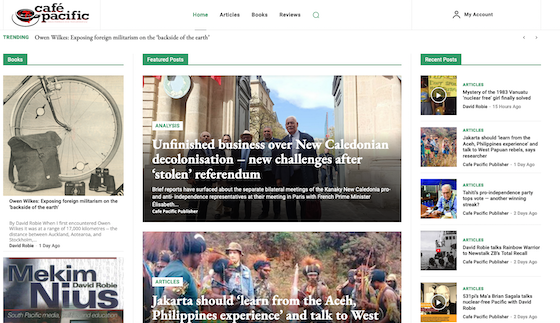
Café Pacific blog has now expanded into a new independent website

Café Pacific . . . an innovative approach.
IMAGE: Café Pacific

PACIFIC MEDIA WATCH

Journalist, author and media academic David Robie has launched an independent news and current affairs website to complement his long-established Asia Pacific Report.

While Asia Pacific Report will continue to cover regional affairs, the new website — dubbed Café Pacific, the same name as his blog which is being absorbed into the new venture — will focus on more in-depth reports and make available on open access a range of books and articles previously hidden behind paywalls.

Café Pacific will be operated on a Creative Commons licence basis as is APR.

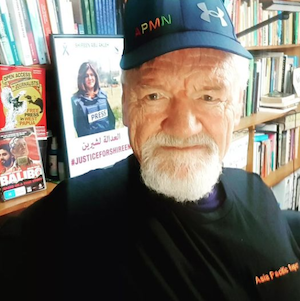
Dr David Robie
Dr David Robie . . . editor and publisher of Café Pacific.
IMAGE: APR

Dr Robie, formerly founding director of AUT’s Pacific Media Centre and a professor of Pacific journalism, described the website project as “innovative”.

Saturday, October 22, 2022

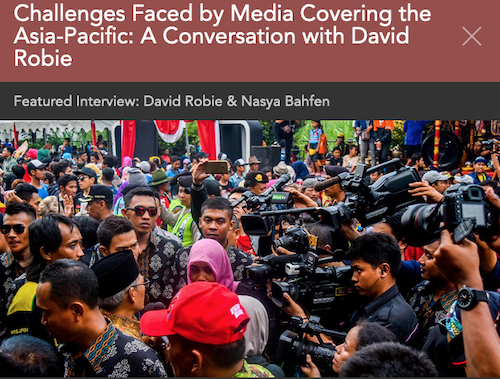
Pacific lessons in climate crisis journalism and combating disinformation - David Robie

Media educator and Asia Pacific Report editor Professor David Robie tells of the resilience
and courage of Pacific journalists faced with many challenges.
IMAGE: MediAsia Iafor/La Trobe screenshot
By MEDIASIA IAFOR

New Zealand journalist and academic David Robie has covered the Asia-Pacific region for international media for more than four decades.

An advocate for media freedom in the Pacific region, he is the author of several books on South Pacific media and politics, including an account of the French bombing of the Greenpeace flagship Rainbow Warrior in Auckland Harbour in 1985 — which took place while he was on the last voyage.

In 1994 he founded the journal Pacific Journalism Review examining media issues and communication in the South Pacific, Asia-Pacific, Australia and New Zealand.

He is also convenor of the Pacific Media Watch media freedom collective, which collaborates with Reporters Without Borders in Paris, France.

Until he retired at Auckland University of Technology in 2020 as that university’s first professor in journalism and founder of the Pacific Media Centre, Dr Robie organised many student projects in the South Pacific such as the Bearing Witness climate action programme.

He currently edits Asia Pacific Report and is one of the founders of the new Aotearoa New Zealand-based NGO Asia Pacific Media Network.


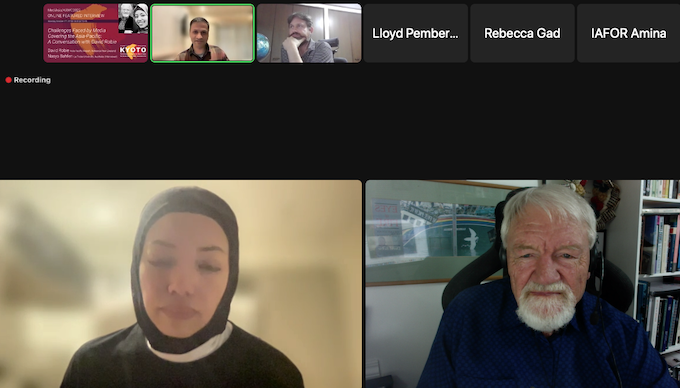
Watch the conversation between Dr Nasya Nahfen and Asia Pacific Report editor Professor David Robie. VIDEO: MediAsia Iafor/Café Pacific Media

In this interview conducted by Mediasia organising committee member Dr Nasya Bahfen of La Trobe University for this week’s 13th International Asian Conference on Media, Communication and Film that ended today in Kyoto, Japan, Professor Robie discusses a surge of disinformation and the challenges it posed for journalists in the region as they covered the covid-19 pandemic alongside a parallel “infodemic” of fake news and hoaxes.

The MediAsia “conversation” on Asia-Pacific issues in Kyoto, Japan.
IMAGE: Iafor screenshot APR
He also explores the global climate emergency and the disproportionate impact it is having on the Asia-Pacific.

Paying a tribute to the dedication and courage of Pacific journalists, he says with a chuckle: “All Pacific journalists are climate journalists — they live with it every day.”

Challenges facing the Asia-Pacific media
Challenges facing the Asia-Pacific media . . . La Trobe University’s Dr Nasya Bahfen
and Asia Pacific Report’s Dr David Robie in conversation.
IMAGE: Iafor screenshot APR

Tuesday, October 5, 2021

Behind the scenes investigation of Bougainville struggle for independence tops Pacific Journalism Review

Pacific Journalism Review investigation poses questions about the “silence” in Australia
over the controversial Bougainville documentary Ophir that has won several
international film awards in other countries. IMAGE: Ophir still

Pacific Journalism Review

A FRONTLINE investigative journalism article on the politics behind the decade-long Bougainville war leading up to the overwhelming vote for independence is among articles in the latest Pacific Journalism Review.

The report, by investigative journalist and former academic Professor Wendy Bacon and Nicole Gooch, poses questions about the “silence” in Australia over the controversial Bougainville documentary Ophir that has won several international film awards in other countries.

Published this week, the journal also features a ground-breaking research special report by academics Shailendra Singh and Folker Hanusch on the current state of journalism across the Pacific – the first such region-wide study in almost three decades.

Griffith University’s journalism coordinator Kasun Ubayasiri has produced a stunning photo essay, “Manus to Meanjin”, critiquing Australian “imperialist” policies and the plight of refugees in the Pacific.

Tuesday, December 22, 2020

'Empowerment is really important. Journalism isn't just about writing a good story ... but empowering people with information in a democracy'

As well as playing a role in critical moments of history as a journalist in the region,
Professor David Robie's students have also covered landmark events
that helped shape some Pacific nations. Image: AUT Pasifika
By Laurens Ikinia

A JOURNALIST who sailed on board the bombed environmental ship Rainbow Warrior, was arrested at gunpoint in New Caledonia while investigating French military garrisons in pro-independence Kanak villages, and reported on social justice issues across the Pacific has stepped down as founding director of the Pacific Media Centre.

Professor David Robie, 75, an author, academic, independent journalist and journalism professor at Auckland University of Technology, retired last week after more than 18 years at the institution.

He has been working as a journalist for more than 46 years and as an academic for more than 27 years.

As well as playing a role in critical moments of history as a journalist in the region, his students have also covered landmark events that helped shape some Pacific nations, especially in Melanesia – such as the 1997 Sandline mercenary crisis in Papua New Guinea and the George Speight coup in Fiji in May 2000.

But a journalism or academic career were not always clearcut pathways for Dr Robie. During his studies in high school, he was heavily involved in outdoor pursuits and he became a Queen’s Scout.

Thursday, August 16, 2018

Nuclear free and independent Pacific - how the zone began 33 years ago and what now?


From Pacific Media Watch


RADIO 531pi Breakfast Talanoa host Ma'a Brian Sagala has talked about the Rarotonga Treaty with Café Pacific publisher David Robie.
It was hugely significant for the Pacific. It was sort of like a threshold for the Pacific really standing up to the big powers and predated New Zealand’s nuclear-free law.
It was a huge step forward. It was not only a declaration against France, which was detonating nuclear weapons at the time, but also against the US and Britain that had also conducted many nuclear tests in the Pacific.
The South Pacific Nuclear Free Pacific Zone Treaty 33 years ago ushered in a radical era for the Pacific, which predated NZ’s own nuclear-free law.

The Treaty of Rarotonga formalise the Pacific nuclear-free zone on 6 August 1985 and New Zealand's own New Zealand Nuclear Free Zone, Disarmament and Arms Control Act followed two years later on 8 June 1987.

David also talks about the Rainbow Warrior’s humanitarian voyage to Rongelap to help the islanders move to another home across the Pacific Ocean. He is the author of the book Eyes of Fire about nuclear testing in the Pacific.

Monday, July 9, 2018

This week in history - the Rainbow Warrior bombing as told to ABC's Nightlife


Journalist, media educator and author David Robie ... Rainbow Warrior bombing reflections
after 33 years. Image: PMC
Pacific Media Watch Newsdesk
PACIFIC environmental and political journalist David Robie has recalled the bombing of the original Greenpeace flagship Rainbow Warrior 33 years ago in an interview with host Sarah Macdonald on the ABC’s Nightlife “This Week in History” programme.

Dr Robie, now professor of journalism and director of the Pacific Media Centre at Auckland University of Technology, wrote the 1986 book Eyes Of Fire: Last Voyage of the Rainbow Warrior that has been published in four countries and five editions.

LISTEN: Terrorism in Auckland in 1985

Saturday, March 17, 2018

Flashback to the 1968 My Lai massacre: 'Something dark and bloody'


RT's special report on the My Lai massacre and the cover-up of this atrocity.


THE MELBOURNE Sunday Observer -- the original newspaper of that name which campaigned against Australian involvement as a US surrogate in the Vietnam War -- published photographs of the My Lai massacre in December 1969. It was prosecuted for "obscenity" for reporting the atrocity but the charge was later dropped.

Image: David Robie from Al Jazeera
Michael Cannon was editor and David Robie chief subeditor at the time (and later the editor). The photographs were published by arrangement with Life Magazine and were later shown to Federal MPs in an attempt to change Australian government support for the war.

The photographs were published during a period when newspapers in Australia rarely published pictures of bodies, and certainly not as victims of "atrocities" by "our side". This website has a small selection of the photographs published by the Observer.

The Sunday Observer was the springboard for the launching of Nation Review in 1970:

Friday, November 24, 2017

Tiny Timbulsloko fights back in face of Indonesia’s ‘ecological disaster’


Drone views of the village of Timbulsloko showing the scale of coastal erosion and sinking flatlands in an area that once used to be rice fields on the edge of the Central Java city of Semarang. Mangroves are being rapidly re-established. Drone footage source: CoREM (UNDIP). Video compilation: Scott Creighton (AUT), David Robie’s Café Pacific

ANALYSIS: By David Robie in Semarang, Indonesia

A vast coastal area of the Indonesian city of Semarang, billed nine months ago by a national newspaper as “on the brink of ecological disaster”, is fighting back with a valiant survival strategy.

Thanks to a Dutch mangrove restoration programme and flexible bamboo-and-timber “eco” seawalls, some 70,000 people at risk in the city of nearly two million have some slim hope for the future.

An area that was mostly rice fields and villages on the edge of the old city barely two decades ago has now become “aquatic” zones as flooding high tides encroach on homes.

Onetime farmers have been forced to become fishermen.

Villagers living in Bedono, Sriwulan, Surodadi and Timbulsloko in Demak regency and urban communities in low-lying parts of the city are most at risk.

Tuesday, November 3, 2015

The digital media revolution, a free press and student journalism


Keynote speaker and former University of the South Pacific Journalism Programme head Professor David Robie with the FALE Storyboard Award winner for best regional reporting, ‘Ana Uili. David and his wife, Del, donated this West Sepik storyboard for the awards. Photo: Lowen Sei/USP
Professor David Robie's speech at the University of the South Pacific 21st Anniversary Journalism Awards on 30 October 2015:

Kia ora tatou and ni sa bula vinaka,

FIRSTLY, I wish to acknowledge the people of Fiji for returning this wonderful country to democracy last year, and also to the University of the South Pacific and Dr Shailendra Singh and his team for inviting me here to speak at this 21st Anniversary Journalism Awards event.

[Acknowledgements to various university and media VIPs]

As I started off these awards here at the University of the South Pacific in 1999 during an incredibly interesting and challenging time, it is a great honour to return for this event marking the 21st anniversary of the founding of the regional Pacific journalism programme.

Thus it is also an honour to be sharing the event with Monsieur Michel Djokovic, the Ambassador of France given how important French aid has been for this programme.

Friday, January 9, 2015

#JeSuisCharlie : Cartoonist Plantu explains why taunting world leaders is essential

CAFÉ PACIFIC has been prompted with this column about Plantu and an interview he did last year before this week’s barbaric attack on the satirical French magazine Charlie Hebdo leaving 12 cartoonists, media people and a couple of policemen dead. And that's without adding the latest double siege casualties).

Queries in response to an earlier blog posting with questions by Robert Atack and others on whether Charlie Hebdo ran any cartoons about the Rainbow Warrior bombing by French secret agents in 1985 have not been answered here definitively.

Robert asked: “Did [Charlie Hebdo] ever publish any Rainbow Warrior cartoons?”

And then added in his next posting 37 minutes later: “This might be an opportune time to lay a [wreath] for Fernando Pereira. The freelance Dutch photographer, of Portuguese origin, who drowned when French Intelligence (DGSE) sabotaged and sank the Rainbow Warrior ship, owned by the environmental organisation Greenpeace, on 10 July 1985.”

An infamous example of state terrorism three decades ago this July!

Thursday, November 6, 2014

Ricardo Morris ... stripping away the hidden agendas and media myths

Publisher of Repúblika Media Limited Ricardo Morris (second from left) with
University of the South Pacific journalism award recipients. Image: USP
This is the keynote message from Repúblika publisher Ricardo Morris at the University of the South Pacific/Wansolwara journalism awards 2014.

JOURNALISM is an act of faith in the future. That’s what the American television correspondent Ann Curry wrote in a 2010 cover essay in Guideposts magazine. Journalism, she argued, should do more than inform. It should make you care.

Ann’s essay, titled "Telling Stories of Hope", marked her long-deserved promotion to co-host of NBC’s Today show. Ann describes the lure of journalism for her as “a call, an urgency” to report because she knew that doing so would “give voice to those who need to be heard".

Not only do the people affected deserve to be heard, the media-consuming public also deserved to hear about what was happening in other parts of the world because it gave us “a chance to care, and it is that empathy that offers the greatest hope".

In today’s world, with short attention spans, competing media outlets and platforms and a world of information – not all of it edifying – at ordinary people’s fingertips, journalism can still be a way to inject some hope into our world.

Friday, September 12, 2014

'I'll not be intimidated ... by cowards,' says Fiji death threat journalist

Fiji Sun's Jyoti Pratibha ...death threats via fake Facebook profiles. Image: Pacific Scoop
THE PARIS-based media freedom advocacy organisation Reporters Sans Frontières and the Pacific Media Centre have condemned threats and intimidation against political reporters covering Fiji’s first parliamentary election campaign since the  2006 coup.

Pacific Media Watch reports from Paris:

Two women journalists – Vosita Kotowasawasa of the Fiji Broadcasting Corporation (FBC) and Jyoti Pratibha of the Fiji Sun newspaper – received death threats on Tuesday over their previous day’s coverage of the cancellation of a live TV debate between the leading contenders for the post of prime minister.

According to Pacific Scoop, a news website affiliated with the Pacific Media Centre, Kotowasawasa received several threatening phone calls while Pratibha was threatened via fake Facebook user profiles.

Both had covered the previous day’s last-minute decision by Ro Teimumu Vuikaba Kepa, the Roko Tui Dreketi and head of the Social Democratic Liberal Party (SODELPA), to pull out of the debate with interim Prime Minister Josaia Voreqe “Frank” Bainimarama.

Thursday, July 24, 2014

Walkley review: The complex notion of news in the Pacific

Brent Edwards in The Walkley Magazine looks at journalist and academic David Robie’s scrutiny of the Pacific region’s governance and journalism. Cartoon by David Pope.

DAVID ROBIE has spent 35 years working as a journalist and journalism academic in the Asia- Pacific region. In Don’t Spoil My Beautiful Face: Media, mayhem and human rights in the Pacific, Robie summarises his reportage on many of the significant events that have marked his years working in the Pacific. It is part autobiography, part history and part journalism treatise.

As well as providing his perceptive analysis of human rights and democracy, or lack of, in the Pacific, Robie also spends time commenting on journalistic practices, particularly as they relate to reporting on our immediate neighbourhood. For someone like me, who is not an expert on the Pacific, the book is a valuable reference to the significant issues that continue to bedevil the region.

Robie’s book is broad in its compass. It covers the Kanaky struggle for self-determination in New Caledonia, the rise of the Flosse dynasty in Tahiti, coups in Fiji, Chinese influence in Tonga, the struggle in Bougainville, the fight for independence in Timor Leste, the ongoing struggle in West Papua and the bombing of the Rainbow Warrior in Auckland in New Zealand. His stories range as far away as covering indigenous struggles in Canada to the violence in the Philippines. And always he is concerned with human rights in the Pacific.

Robie includes articles he has written over the past 30 years or so, updated by his contemporary analysis of what is happening now. Take New Caledonia for instance. That chapter includes an article Robie wrote for the New Zealand Listener in 1984 titled “Blood on their banner”.

He writes that his reporting on New Caledonia led to a protracted and acrimonious dispute with Fiji’s Islands Business publisher Robert Keith-Reid, when the magazine accused him in 1989 of alleged “leftist” support of Kanak activists. It is just one example of the pressure that has been exerted on Robie and other journalists over their coverage of independence movements in the region.

But it is Robie’s comments on the practice of journalism that should excite the most debate. He makes no bones about his distaste of the tendency of regimes and other vested interests in the region trying to suppress press freedoms, often by intimidation and threats.

His views on journalism in the region have not just been shaped by his experience as a journalist. He has also been the head of journalism at both the universities of Papua New Guinea and the South Pacific and he is now journalism professor and director of the AUT University’s Pacific Media Centre in Auckland.

He praises those journalists throughout the region who struggle to do their job in the face of intimidation, legal restraints and poor pay. But he is less effusive about the role of Western journalism in covering the Pacific. He questions whether the Western notion of news is appropriate to covering the many complex issues in the region. And, before some journalists protest too loudly, this is not a cry for the media to go soft. But Robie does raise some interesting questions about the role of journalism and whether its approach could be altered.

Robie puts forward the case for journalists practising what he calls critical deliberative journalism in the region. He argues that Pacific journalists now have a greater task than ever in encouraging democratisation of the region and informed insights into development, social justice and peace issues facing related island states. In other words, he says journalists should be part of the solution, not part of the problem.

Robie says this does not mean allowing politicians’ slogans, such as “cultural sensitivity”, to be used as a smokescreen for the abuse of power and violations of human rights. Instead, he says the approach he advocates will put greater pressure on journalists to expose the truth and report on alternatives and solutions.

Robie sums it up this way: “Critical deliberative journalism also means a tougher scrutiny of the region’s institutions and dynamics of governance. Answers are needed for the questions: Why, how and what now?”

Those questions do not just apply to the island states. Here in Australia and New Zealand we, too, might consider a different approach to the way we practise journalism.

Friday, June 13, 2014

Pacific media 'too cosy' with political power, says author


From Pacific Media Watch


The Pacific Media Centre's director, Professor David Robie, has called for more emphasis on critical development journalism in the Asia-Pacific region.

Speaking on ABC's Media Report, Dr Robie said there was a tendency globally - and not just in the Pacific -  for journalism to be a "bit too cosy with political power".

"Agendas are often set in the media based around press galleries and what's seen as priorities by governments, whereas critical development journalism is really a proclamation - if you like - for ordinary people getting their values and their needs investigated and getting some sort of result from policy changes," Dr Robie told presenter Richard Aedy.

Discussing the state of media freedom in the Pacific, Dr Robie said West Papua was the most neglected region in the Pacific in terms of media coverage, mainly because there was "virtually no ready access into West Papua by journalists".

To report from West Papua without being sanctioned by the Indonesian government was risky for journalists, and even more so for their contacts and sources, added the author of the recently published Don't Spoil My Beautiful Face: Media, Mayhem and Human Rights in the Pacific.

Thursday, May 15, 2014

David Robie on ‘critical development journalism’

Media in Jayapura pictured in a photograph from Don't Spoil My Beautiful Face featured during a course
in "Safe Witness Journalism". Photo: West Papua Media
Media with Gavin Ellis – Radio New Zealand National

REVIEW: WHAT makes the book Don’t Spoil My Beautiful Face: Media, Mayhem and Human Rights in the Pacific really interesting is that it’s not just the reprinting of David Robie’s very good investigative pieces of reporting, but he weaves into it his autobiographical story and that gives context to his various pieces that he has gathered together.

A wide range of stories from the Kanak uprising of the 1980s, the Fiji coups, Moruroa - really the whole breadth of events in the Pacific over the last 30 or 40 years ...  And it’s deep journalism …

It gets rights inside the issues and shows the trust that was placed in David Robie by people who really wanted their stories told. So it is well contextualised and I think it is a real contribution to Pacific journalism by collecting it all together.

The final part of the book is about his role as a journalism educator, and also his perceptions of the way that journalism in the Pacific has developed. He has a very interesting model that he calls critical development journalism. It is a little bit like investigative journalism.

Friday, May 2, 2014

Sedition, e-libel become the new Pacific media front line

Participants in today's University of the South Pacific media freedom forum chaired by
Stanley Simpson (centre), founding editor of Wansolwara. Image: USP Livestreaming
Criminal cyber defamation, journalist killings with impunity and legal gags are growing threats to Asia-Pacific press freedoms, writes educator David Robie on World Media Freedom Day.

ONE OF Fiji’s best investigative journalists and media trainers ended up as a spin doctor and henchman for wannabe dictator George Speight. Like his mentor, he is now languishing in jail for life for treason.

Some newshounds in Papua New Guinea have pursued political careers thanks to their media training, but most have failed to make the cut in national politics.

A leading publisher in Tonga was forced to put his newspaper on the line in a dramatic attempt to overturn a constitutional gag on the media. He won—probably hastening the pro-democracy trend in the royal fiefdom’s 2010 general election.

The editor of the government-owned newspaper in Samoa runs a relentless and bitter “holier than thou” democracy campaign against the “gutless” media in Fiji that he regards as too soft on the military-backed regime. Yet the editor-in-chief of the rival independent newspaper accuses him of being a state propagandist in a nation that has been ruled by one party for three decades.

In West Papua, Indonesia still imposes a ban on foreign journalists in two Melanesian provinces where human rights violations are carried out with virtual impunity. Journalists in the Philippines are also assassinated with impunity.

Thursday, April 24, 2014

A measured media brand of Pacific thoughtfulness, courage and balance

David Robie with TVNZ Tagata Pasifika reporter John Pulu at the book launch. Image: Del Abcede/PMC

BARBARA DREAVER, on assignment for Television New Zealand somewhere in the Pacific, sent this book launching message for David Robie's Don’t Spoil My Beautiful Face last night. It was read out by Sandra Kailahi, chair of the Pacific Islands Media Association (PIMA), who launched the book:
Don’t Spoil My Beautiful Face takes its readers on a journey through a sometimes unfamiliar Pacific…and it’s a road you can’t help thinking you should be travelling on.

TVNZ's Barbara Dreaver ... book launch message
for David Robie's Don't Spoil My Beautiful Face.
Photo: PMC
West Papua, Bougainville, Fiji – it’s every journalist’s conscience. If it’s not, then it should be.

The stories explored in
Don’t Spoil My Beautiful Face are vitally important and delightfully varied.

From the Hagahai tribesman whose blood cells have been patented by the United States to the struggles of Tonga’s media over the years with the public’s right to know under threat.

David Robie has been at the forefront of Pacific journalism for decades bringing his brand of measured thoughtfulness, courage and balance.

His account of reporting in the Philippines on the “Forgotten Victims of a Silent War 1991” is chilling. Equally so “Terror in Timor” and the self-censorship of mainstream media reporting on it.

And lest we think that was in the past, look no further than West Papua - a brutal modern day example of a story that may as well be virtually non-existent.

David Robie’s book reads like the man – there’s no fancy bells and whistles. It’s a stripped back and honest look at a region facing many challenges.

Don’t Spoil My Beautiful Face is not only a valuable tool for budding journalists, it’s essential reading for anyone who cares about the Pacific.

I am privileged to know David Robie. He is a great colleague but also a mentor who has been unfailingly supportive to me working in this region I love. I was very proud to be asked to launch this book –  but it was a risky move given I am often out of the country.

Sadly, that has proven to be the case here.

But I will conclude by saying this: David Robie, a leading advocate for media freedom and quality journalism, has yet again proven he is a brilliant author.
More stories
Radio New Zealand International interview

Thursday, November 7, 2013

Scandinavian media and press freedom travels

A light-hearted moment for a police squad during a demonstration in Vilnius. Image from
the Lithuanian National Press Agency exhibition at the Helsinki Town Hall, Finland.
Photo: David Robie
CAFÉ PACIFIC’S publisher David Robie has been travelling widely on sabbatical across Scandinavia and France in the past few weeks, meeting media freedom campaigners (such as at Reporters Sans Frontières), giving guest lectures at journalism schools such as at Stockholm University and the Danish School of Media and Journalism, and on various research projects.

David Robie 'reading' Norway's
Aftonbladet Söndag.
Some of his images can be seen on his Facebook page and watch for other reports at the Pacific Media Centre.

Sunday, September 22, 2013

Activist charged with illegally screening No Fire Zone doco about Sri Lanka's 'Killing Fields'

Callum Macrae, filmmaker and journalist, has been at the forefront of a campaign to bring the government of Rajapaksa to the International Court of Justice for crime against humanity. Malaysiakini.tv spoke to Macrae about his film.

 From The Nation in Kuala Lumpur
 
A HUMAN rights activist has been charged at the magistrate's court in Kuala Lumpur with the screening of a controversial documentary, which was not cleared by the Film Censorship Board, on the alleged atrocities by the Sri Lankan army during the country's civil war.

An excerpt from the documentary was shown at AUT University in Auckland last week with the launching of the Asia-Pacific Human Rights Coalition (APHRC) in association with the Pacific Media Centre.


An Amnesty International spokesperson and other activists spoke at the Auckland meeting.

Lena Hendry, 28, a Komas programme coordinator, claimed trial to screening the film No Fire Zone: The Killing Fields of Sri Lanka at the Kuala Lumpur and Selangor Chinese Assembly Hall, Jalan Maharajalela, at 9pm on July 3, 2013.

She was charged under the Film Censorship Act 2002 and is liable to a maximum fine of RM30,000 (about NZ$11,000) or three years jail, upon conviction.

Tuesday, September 10, 2013

Damning indictment of nuclear testing in the Pacific


Nuclear Exodus - Rongelap Islanders on board the Rainbow Warrior. Photo/video: David Robie

Flashback to 1987: NUCLEAR EXODUS: THE RONGELAP EVACUATION

The legacy from US nuclear testing in the Marshall Islands has provided a media backdrop to last week's 44th Pacific Islands Forum in Majuro. Here is a short documentary made by David Robie and his Aroha Productions team and broadcast by Television New Zealand.

The item was published in the New Zealand Listener as a documentary preview on 2 May 1987 before the film was screened on TVNZ's Tagata Pasifika:

By Pamela Stirling, editor of the NZ Listener

The Rongelap Islanders of Micronesia have been described as the first victims of World War Three.

Many of them remember March 1, 1954, as the day it "snowed" on their atoll, as deadly fallout dusted down from a 15 megaton thermonuclear test, codenamed Bravo, held on Bikini Atoll.

Since then Rongelap people have suffered leukaemia deaths, cancers, thyroid tumours, miscarriages, deformed children and births described as "jellyfish" babies.

A noted American researcher has predicted that everyone who was aged under 10 when the contamination occurred will die of cancer.

This award-winning, 12-minute film tells the story of their contamination, and of their evacuation three decades later by the peace ship Rainbow Warrior to Mejato Island, 150 km away. Scripted and co-produced by Pacific affairs writer David Robie, Nuclear Exodus is a damning indictment of the nuclear machine.

>>> Popular Café Pacific Posts