Showing posts with label geopolitics. Show all posts

Friday, December 30, 2022

2022 Pacific political upheavals, elections eclipse Tongan volcano

Popular original 1987 coup leader Sitiveni Rabuka . . . back as prime minister in Fiji
but with promises of a more democratic and transparent era. Image: FIJIVILLAGE

2022 PACIFIC REVIEW:
By David Robie

The Pacific year started with a ferocious eruption and global tsunami in Tonga, but by the year’s end several political upheavals had also shaken the region with a vengeance.

A razor’s edge election in Fiji blew away a long entrenched authoritarian regime with a breath of fresh air for the Pacific, two bitterly fought polls in Papua New Guinea and Vanuatu left their mark, and growing geopolitical rivalry with the US and Australia contesting China’s security encroachment in the Solomon Islands continues to spark convulsions for years to come.

It was ironical that the two major political players in Fiji were both former coup leaders and ex-military chiefs – the 1987 double culprit Sitiveni Rabuka, a retired major-general who is credited with introducing the “coup culture” to Fiji, and Voreqe Bainimarama, a former rear admiral who staged the “coup to end all coups” in 2006.

It had been clear for some time that the 68-year-old Bainimarama’s star was waning in spite of repressive and punitive measures that had been gradually tightened to shore up control since an unconvincing return to democracy in 2014.

And pundits had been predicting that the 74-year-old Rabuka, a former prime minister in the 1990s, and his People’s Alliance-led coalition would win. However, after a week-long stand-off and uncertainty, Rabuka’s three-party coalition emerged victorious and Rabuka was elected PM by a single vote majority.

Tuesday, October 6, 2020

Victory in defeat for Kanak independence movement in latest referendum


A display of Kanaky independence flags on referendum day.
Image: Al Jazeera/PMC screenshot

ANALYSIS:
By David Robie

WHILE pro-independence Kanak supporters rued another defeat in the second referendum on independence for New Caledonia at the weekend, it was even narrower than the loss two years ago. Now there is a real prospect of a win in 2022.

“The path to independence and sovereignty is inevitable,” pledges the Front de Libération Nationale Kanak et Socialiste (FLNKS) – the umbrella group of the pro-independence parties and the struggle will go on.

Roch Wamytan, president of New Caledonia’s parliamentary Congress and a key leader of the FLNKS’ Union Calédonienne, vows the independence lobbying will press for the third referendum in two years’ time – and even later if needed.

If there is a third defeat, “we’ll talk, and we’ll figure something out”.

Saturday, October 19, 2019

Iran a hugely ‘friendly’ country behind the sabre-rattling


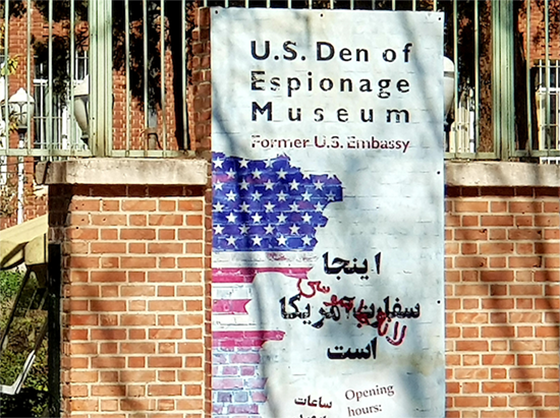
The fate of the "US Den of Espionage" ... Washington's embassy that was seized by Iranian protesters
along with 52 diplomat hostages during the revolution in 1978
is now a museum to US unpopularity in Tehran. Image: David Robie/PMC
Iran attracts an onslaught of negative media in New Zealand and Western media. But is it fair or deserved? David Robie has spent several weeks travelling in the country on sabbatical and finds the media negativity far from the reality of the “most friendly” country he has ever visited in the first of a three-part series.

THE HEADLINES were chilling as we flew into Turkey and then Iran. “All out war”, trumpeted The New Zealand Herald, as being an imminent response to last month’s surprise drone attack knocking out almost 50 percent of Saudi Arabia’s oil production, blaming the attack on the Islamic Republic without convincing evidence.

President Donald Trump warned that the US was “locked and loaded” if Iran was found to be behind the attacks, and then later apparently backed off and relied on even heavier sanctions.

The next day the Herald belatedly ran the other side of the story, quoting Iranian President Hassan Rouhani’s response denying the allegations and warning that Iran would defend itself in the case of a US-Saudi attack while offering the “hand of friendship and brotherhood” for overseeing security in the Persian Gulf.

Houthi forces in neighbouring Yemen, invaded by a Saudi-led coalition in 2015 that led to widely condemned four-year civil war, claimed to have carried out the drone and rocket attack on the two oil installations at Abaiq and Khurais.

>>> Popular Café Pacific Posts