Showing posts with label fiji. Show all posts

Tuesday, January 31, 2023

Fiji’s media veterans recount intimidation under FijiFirst government – eye on reforms

Fiji journalist Lice Movono talks to Café Pacific publisher David Robie while
preparing interviews for her media freedom podcast for Radio Australia's
Pacific Beat. IMAGE: Screenshot Café Pacific

Pacific Media Watch

RADIO Australia’s Pacific Beat reports on how Fiji has fared under the draconian Media Act that has restricted media freedom over the past decade and moves to change the law.

There are hopes that state-endorsed media censorship will stop in Fiji following last month’s change in government to the People’s Alliance-led coalition.

Reported by Fiji correspondent Lice Movono, the podcast outlines former Fiji Times editor-in-chief Netani Rika’s experiences of repression under the former FijiFirst government.

But a change in government has also been reflected by a change in attitude towards the media.

It comes as the Fijian Broadcasting Corporation board has terminated the contract of FBC’s chief executive Riyaz Sayed-Khaiyum amid reports that the CEO for the public broadcaster earned more money than the prime minister of the country.

Friday, December 30, 2022

2022 Pacific political upheavals, elections eclipse Tongan volcano

Popular original 1987 coup leader Sitiveni Rabuka . . . back as prime minister in Fiji
but with promises of a more democratic and transparent era. Image: FIJIVILLAGE

2022 PACIFIC REVIEW:
By David Robie

The Pacific year started with a ferocious eruption and global tsunami in Tonga, but by the year’s end several political upheavals had also shaken the region with a vengeance.

A razor’s edge election in Fiji blew away a long entrenched authoritarian regime with a breath of fresh air for the Pacific, two bitterly fought polls in Papua New Guinea and Vanuatu left their mark, and growing geopolitical rivalry with the US and Australia contesting China’s security encroachment in the Solomon Islands continues to spark convulsions for years to come.

It was ironical that the two major political players in Fiji were both former coup leaders and ex-military chiefs – the 1987 double culprit Sitiveni Rabuka, a retired major-general who is credited with introducing the “coup culture” to Fiji, and Voreqe Bainimarama, a former rear admiral who staged the “coup to end all coups” in 2006.

It had been clear for some time that the 68-year-old Bainimarama’s star was waning in spite of repressive and punitive measures that had been gradually tightened to shore up control since an unconvincing return to democracy in 2014.

And pundits had been predicting that the 74-year-old Rabuka, a former prime minister in the 1990s, and his People’s Alliance-led coalition would win. However, after a week-long stand-off and uncertainty, Rabuka’s three-party coalition emerged victorious and Rabuka was elected PM by a single vote majority.

Friday, September 9, 2022

Late Queen Elizabeth’s 1953 Pacific royal tour teaches us much about how we saw the world

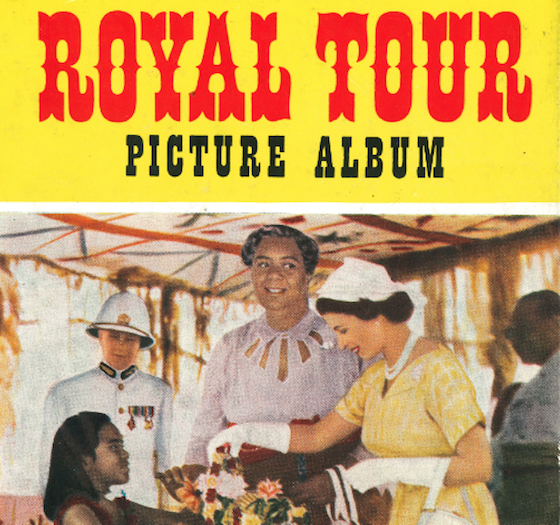
The Sunday Graphic's 1953 Royal Tour Picture Album ... "The tour seems to have been
a strange affair, a tour of places rarely visited by royalty alongside some more important,
but equally far-flung outposts of the Commonwealth. It was rather like
Iron Maiden playing in Christchurch or Caracas." IMAGE: PJR screenshot

As global tributes pour in for Queen Elizabeth II, who has died at 96 after an extraordinary reign of 70 years, my colleague PHILIP CASS, editor of Pacific Journalism Review, reflects on the late Queen’s first — of many — royal tours of the Pacific and what it reveals about colonial attitudes of the time.

One of the joys of travelling the world and collecting books is the historical oddities that turn up in the most unexpected places.

I have a splendid copy of the complete works of Shakespeare dating to the Second World War, completely re-set, so the frontispiece notes, due to the original plates having been “destroyed by enemy action”. One wonders at the perfidy of the Luftwaffe in trying to blow up the Bard.

I have a copy of Grove’s encyclopaedia of music from the 1930s which notes with disdain that attempts to make jazz respectable by using an orchestra have failed—and this written several years after Gershwin’s Rhapsody in Blue. The same volume also contains a section on the influence of Jews in classical music, noting such important ‘Hebrew’ composers as Mahler.

Both these volumes came from a secondhand bookseller near the bus station in Suva: relics, I suppose, of a long departed British colonial administrator.

Each of these volumes is a window into the past and into attitudes and ideas that have long vanished.

In the year of the Platinum Jubilee of the late Queen Elizabeth II—who died yesterday aged 96 after a 70-year reign—it was therefore timely to find a copy of the Royal Tour Picture Album, a lavishly illustrated record of her 1953 tour of the Commonwealth in my local Salvation Army shop.

The 1953 tour seems to have been a strange affair, a tour of places rarely visited by royalty alongside some more important, but equally far-flung outposts of the Commonwealth. It was rather like Iron Maiden playing in Christchurch or Caracas.

Monday, June 6, 2022

Ramos-Horta challenges Pacific’s biggest threat to media freedom – China’s gatekeepers

Showing how it's done ... a "more open" media conference in Dili
with China's Foreign Minister Wang Yi. IMAGE: TL Presidential Palace media
 

 By DAVID ROBIE

Timor-Leste, the youngest independent nation and the most fledgling press in the Asia-Pacific, has finally shown how it’s done — with a big lesson for Pacific island neighbours.

Tackle the Chinese media gatekeepers and creeping authoritarianism threatening journalism in the region at the top.

In Dili on the final day of Chinese Foreign Minister Wang Yi’s grand Pacific tour to score more than 50 agreements and deals — although falling short of winning its Pacific region-wide security pact for the moment — newly elected (for the second time) President José Ramos-Horta won a major concession.

Enough of this paranoid secrecy and contemptuous attitude towards the local – and international – media in democratic nations of the region.

Under pressure from the democrat Ramos-Horta, a longstanding friend of a free media, Wang’s entourage caved in and allowed more questions like a real media conference.

Friday, November 26, 2021

Journalism education ‘truth’ challenges in an age of growing hate, intolerance and disinformation


Four months ago Papua New Guinean journalists had been warning about increasing tensions over misinformation about COVID vaccines and a lack of clear communication from health authorities.
IMAGE: Screenshot Guardian Pacific Project

By DAVID ROBIE

IN RESPONSE to the escalating COVID-19 coronavirus pandemic in mid-February 2020 came a warning by the World Health Organisation (WHO) Secretary-General, Dr Tedros Adhanom, who declared that “we’re not just fighting an epidemic; we’re fighting an infodemic”. He added that fake news “spreads faster and more easily than this virus” .

The following month, in March 2020, UN Secretary-General António Guterres identified the “new enemy” as a “growing surge of disinformation”. However, the term “disinfodemic” – which I much prefer – was adopted by the authors of a policy brief for UNESCO to describe the “falsehoods fuelling the pandemic”.

This disinfodemic has been rapidly leading to upheavals in many countries – including in Australia and Aotearoa New Zealand in the weeks with protests, civil disobedience and attacks on health officials, medical staff and frontline workers.

Such assaults and violent confrontations have taken particular nasty turns in some of our neighbouring microstates of the South Pacific – notably Fiji and Papua New Guinea, the largest countries and biggest economies in the region.

Saturday, May 29, 2021

Days of Fiji ‘banana republic’ protests remembered in Bavadra reunion

Coalition for Democracy chair Adi Asenaca "Dia" Uluiviti and Jo Elvidge do an
impromptu reenactment of a "banana republic" protest - complete with balaclava mask -
by Fiji democracy protesters in Auckland during 1987 at last night's Bavadra
memorial reunion. IMAGE: David Robie/APR

By DAVID ROBIE

Bananas, balaclavas and banners … these were stock-in-trade for human rights activists of the New Zealand-based Coalition for Democracy in Fiji who campaigned against then Colonel Sitiveni Rabuka’s original two coups in 1987 and the “banana republic” coup culture that emerged.

Many of the activists, politicians, trade unionists, civil society advocates and supporters of democracy in Fiji gathered at an Auckland restaurant in Cornwall Park to reflect on their campaign and to remember the visionary Fiji Labour Party prime minister Dr Timoci Bavadra who was ousted by the Fiji military on 14 May 1987.

Speakers included Auckland mayor Phil Goff, who was New Zealand foreign minister at the time, and keynote Richard Naidu, then a talented young journalist who had emerged as Dr Bavadra’s spokesperson — “by accident” he recalls — and movement stalwarts.

The mood of the evening was a fun-filled and relaxed recollection of coup-related events as about 40 participants — many of them exiled from Fiji — sought to pay tribute to the kindly and inspirational leadership of Dr Bavadra who died from cancer two years after the coup.

Participants agreed that it was a tragedy that Dr Bavadra had died such an untimely death at 55, robbing Fiji of a new style of social justice leadership that stood in contrast with the autocratic style of the current Fiji “democracy”.

Thursday, February 4, 2021

Politicians, educators, advocates blast Fiji’s ‘barbaric’ deportation of USP academic head


USP's Australian Professor Pal Ahluwalia ... deported today on a flight to Brisbane.
Image: PMW
By Pacific Media Watch

POLITICIANS, educators and civil society advocates around the region today condemned the “barbaric” and “shameful” detention and deportation of the regional University of the South Pacific’s vice-chancellor Professor Pal Ahluwalia and his wife.

Reformist Professor Ahluwalia, an Australian, and his wife, Sandra, were detained by Fiji authorities at their Suva home late last night and deported on a flight to Brisbane this morning.

The USP Council is due to meet in Suva tomorrow and the chancellor, Nauru Lionel Aingimea said today a statement would be made later.

In Rarotonga, the director of USP’s Cook Islands campus, Dr Debbie Futter-Puati, said the university’s independence was under threat in Fiji.

Responding to questions from The Fiji Times, she questioned how the university’s vice chancellor’s deportation would advantage the Fijian government.

“The University is a private, independent educational facility owned by 12 member countries who must surely take exception to this action,” she said.

“I sincerely hope member countries make a strong and united stance back to Fiji government on this aggressive and inappropriate action.”

‘Outrageous’ act
Human rights activist and former human rights commissioner Shamima Ali described the forceful removal and deportation as “shameful, outrageous and not the Pacific way”.

National Federation Party leader Professor Biman Prasad said at a time when Fiji should be supporting victims of cyclones Yasa and Ana, government was “instead focused [on] its own petty jealousies”.

Social Democratic Liberal Party leader Viliame Gavoka condemned the arrest and deportation of Professor Ahluwalia and his wife as “barbaric treatment”.

The University of the South Pacific Staff Union and Association of USP Staff issued a joint statement today expressing “grave concern and disgust at the FijiFirst government’s” action.

“We are alarmed by the way that the government of Fiji broke into the vice-chancellor’s residence in the middle of the night (03.02.21) and orchestrated the removal of VCP Pal and his wife,” the unions said.

“The manner in which the VCP and his wife were removed is a violation of human rights and due process.

“Given the seriousness of the decision, we demand the Fiji government … provide the justification for this Gestapo tactic.”

The unions said USP was a regional organisation like Pacific Islands Forum Secretariat, SPREP, FFA, SPC and demanded the same respect given to any regional organisation.

Sunday, April 5, 2020

Creeping authoritarianism in Pacific not the answer to virus pandemic

The USS Theodore Roosevelt docked in Guam ... local critics unhappy about a "dangerous" gamble
with coronavirus. Image: US Navy screenshot
PACIFIC PANDEMIC DIARY: By David Robie, self-isolating in Auckland under New Zealand’s Covid-19 lockdown as part of a Pacific Media Watch series.

A RATHER beautiful Guåhan legend is rather poignant in these stressed pandemic times. It is one about survival and cooperation.

In ancient times, goes the story, a giant fish was eating great chunks out of this western Pacific island. The men used muscle and might with spears and slings to try to catch it.

This didn’t work. So, the women from many villages got together while washing their hair in a river. They wove their locks into a super strong net, caught the fish and saved the island.

Saturday, May 4, 2019

Pacific media freedom and news ‘black holes’ worsen for World Press Freedom Day

World Press Freedom Day coverage on the Pacific Media Centre's Asia Pacific Report. Image: PMC screenshot
 By David Robie 

While Pacific countries have got off rather lightly in a major global media freedom report last month with most named countries apparently “improving”, the reality on World Press Freedom Day is that politicians are becoming more intolerant and belligerent towards news media and information “black holes” are growing.

The Pacific is at the milder end on the scale of media freedom violations – there are no assassinations, murders, gaggings, torture and disappearances.

But the global trend of “hatred of journalists [degenerating] into violence, contributing to an increase of fear” warned about by the Paris-based global watchdog Reporters Without Borders is being reflected in our region.

READ MORE: Pacific countries score well in media freedom index, but reality is far worse

Lack of safety for journalists is a growing concern for media organisations around a world where 80 journalists were killed last year, with 348 being jailed and 60 held hostage.

Friday, July 13, 2018

Nauru, Fiji and Pacific Facebook gags criticised in Asia-Pacific media freedom summit


Reporters Without Borders secretary-general Christophe Deloire talks about the global threat against journalists.
Video:
Café Pacific

By David Robie in Paris
WHEN Reporters Without Borders chief Christophe Deloire introduced the Paris-based global media watchdog’s Asia-Pacific press freedom defenders to his overview last week, it was grim listening.

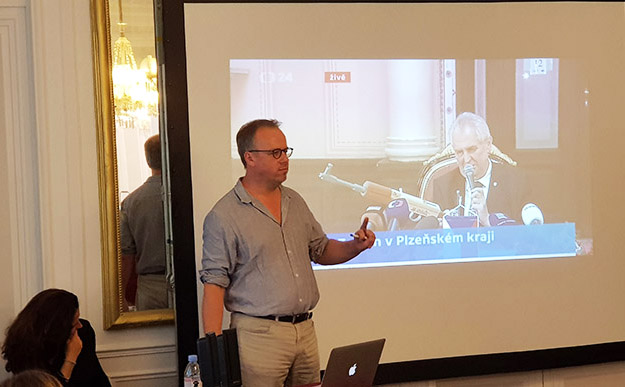
First up in RSF’s catalogue of crimes and threats against the global media was Czech President Miloš Zeman’s macabre press conference stunt late last year.

However, Zeman’s sick joke angered the media when he brandished a dummy Kalashnikov AK47 with the words “for journalists” carved into the wood stock at the October press conference in Prague and with a bottle of alcohol attached instead of an ammunition clip.

RSF’s Christophe Deloire talks of the Czech President’s anti-journalists gun “joke”.
Image: David Robie/PMC
Zeman has never been cosy with journalists but this gun stunt and a recent threat about “liquidating” journalists (another joke?) rank him alongside US President Donald Trump and the Philippines leader, Rodrigo Duterte, for their alleged hate speech against the media.

Friday, February 2, 2018

Coups, globalisation and tough questions for Fiji's future

The General's Goose - three decades of Fiji "coup culture". And what now with the second
post-coup election due this year?
REVIEW: By David Robie of Café Pacific
Historian Dr Robbie Robertson ... challenges "misconceptions"
about the Bainimarama government and previous coups, and asks
fundamental questions about Fiji's future.


When Commodore (now rear admiral retired and an elected prime minister) Voreqe Bainimarama staged Fiji’s fourth “coup to end all coups” on 5 December 2006, it was widely misunderstood, misinterpreted and misrepresented by a legion of politicians, foreign affairs officials, journalists and even some historians.

A chorus of voices continually argued for the restoration of “democracy” – not only the flawed version of democracy that had persisted in various forms since independence from colonial Britain in 1970, but specifically the arguably illegal and unconstitutional government of merchant banker Laisenia Qarase that had been installed on the coattails of the third (attempted) coup in 2000.

Yet in spite of superficial appearances, Bainimarama’s 2006 coup contrasted sharply with its predecessors.

Bainimarama attempted to dodge the mistakes made by Sitiveni Rabuka after he carried out both of Fiji’s first two coups in 1987 while retaining the structures of power.

Instead, notes New Zealand historian Robbie Robertson who lived in Fiji for many years, Bainimarama “began to transform elements of Fiji: Taukei deference to tradition, the provision of golden eggs to sustain the old [chiefly] elite, the power enjoyed by the media and judiciary, rural neglect and infrastructural inertia” (p. 314). But that wasn’t all.

Sunday, April 17, 2016

Pacific human rights advocacy as a ‘mindful’ journalist


Pacific Media Centre's Professor David Robie and Tongan publisher, broadcaster and communications adviser
Kalafi Moala at the human rights forum in Nadi, Fiji. Image: Jilda Shem/RRRT
FROM HUMAN RIGHTS ABUSES REPORTS TO DEFENDING FREEDOM OF SPEECH TO RIGHTS-BASED JOURNALISM

(Note: This commentary is extracted from David Robie's notes as part of a multimedia keynote presentation at the Enhancing a Human Rights-based Approach to News Reporting Forum in Nadi, Fiji, 13-15 April 2016 . The notes were written originally to go with a series of slides and embedded video clips).

SOME of you perhaps may be mystified or puzzled about why I have included the term ‘mindful’ journalism in the title of this presentation. I’ll explain later on as we get into this keynote talk. But for the moment, let’s call it part of a global attempt to reintroduce “ethics” and “compassion” into journalism, and why this is important in a human rights context.

Human rights has taken a battering in recent times across the world, and perhaps in the West nowhere as seriously as in France on two occasions last year and Brussels last month. After the earlier massacre of some 12 people in the attack on the satirical magazine Charlie Hebdo in January, there was a massive wave of rallies in defiance and in defence of freedom of speech symbolised by the hashtag #JeSuisCharlie – I am Charlie.

Investigators in both Belgium and France worked on the links between the two series of attacks and have made a breakthrough in arresting two key figures alleged to be at the heart of the conspiracy, Salah Abdeslam and Mohamed Abrini, a 31-year-old Belgian-Morrocan suspected to be the “man in the hat” responsible for the bomb that didn’t go off at Brussels airport.

Thursday, March 3, 2016

Kurdish hacker targets Fiji police, military websites - offline all day

11:05am This page replaced the homepage of the RFMF, Fiji Police, and Fiji Immigration websites this morning. Image: Newswire Fiji
SIX hours after this hacking was reported by Newswire Fiji, Café Pacific checked and found these Fiji websites still "defaced, offline or under repair ..."
By Allison Penjueli of Newswire Fiji

Websites belonging to the Republic of Fiji Military Force (RFMF), Fiji Police Force and the Immigration Department were today “defaced” apparently by a Kurdish hacker known for his anti-ISIS views.

In the attack, MuhmadEmad uploaded a picture of the Kurdish flag along with the words, “KurDish HaCkerS WaS Here” and “HaCKeD by MuhmadEmad, Long Live to peshmarga.” This was a reference to the Kurdish army of Peshmerga, which has been fighting to defend its homeland from the so-called Islamic State force based in Iraq.

Fiji police spokesperson Inspector Josaia Weicavu said the force was aware of the hack and was working to rectify it.

An RFMF spokesperson was unaware of the incident when contacted, but said he would look into the issue.

Sunday, June 28, 2015

Fiji, PNG lead betrayal, but still West Papuans triumph

A massive crowd at Timika, Papua, greets the MSG decision to grant West Papuans observer status.
Image: Free West Papua Campaign
COMMENT By David Robie

THE Melanesian Spearhead Group leaders’ summit in Honiara this week must go down as the most shameful since the organisation was founded two decades ago.

It had the opportunity to take a fully principled stand on behalf of the West Papuan people, brutally oppressed by Indonesia after an arguably “illegal” occupation for more than a half century.

Host nation Solomon Islands Prime Minister and chair Mannaseh Sogareve set the tone by making an impassioned plea at the start of the summit, predicting a “test” for the MSG. He said it would be an issue of human rights and the rule of law.

In the end, the MSG failed the test with a betrayal of the people of West Papua by the two largest members. Although ultimately it is a decision by consensus.

Instead, the MSG granted Indonesia a “promotion” to associate member status – an Asian country, not even Melanesian?

Tuesday, May 19, 2015

Time to end this noose around the Fiji media’s neck

Professor Biman Prasad ... advocate for Fiji press freedom. Photo: Repúblika
PROFESSOR BIMAN PRASAD has long been outspoken about the state of the media in Fiji. He had a simple but staunch line throughout the election campaign about the Media Decree: It had to go.

Back in 2008, two years after the Bainimarama military coup, he teamed up with University of the South Pacific journalism academic Shailendra Singh, to produce a courageous book pulling together a collection of papers about democracy and the media in Fiji.

So it was no surprise that would he would test the decree by tabling a motion in the Fiji Parliament last week to remove or modify the invidious and misguided legislation.

And although it was defeated,  24-17, it was interesting to see the number of absentions (9 on the government side). The motion wasn’t defeated as heavily as it might have been.

Worth another shot soon.

Monday, April 20, 2015

Fiji needs independent watchdog to watch MIDA for future elections


WHILE the Multinational Observer Group’s final report on the first post-coup Fiji general election since 2006 last week found the poll “credible” - as expected based on its preliminary report in spite of the cries of "fraud" by critics - it has offered a raft of recommendations for improvement, including with the news media.

Among these recommendations is a call for an independent watchdog for the controversial Fiji Media Industry Development Authority (MIDA), which had a mixed role during the elections.

Arguing that should MIDA continue its role in future elections, the final MOG report said there was a need for “an independent institution to adjudicate complaints about its actions”.

Citing the 2013 Constitution’s section 17 providing for freedom of “speech, expression and publication”, MOG was in general complimentary about the Fiji news media, saying they “made good efforts to cover the election”.

And thus political parties were “to varying degrees” able to communicate to the public.

Thursday, February 19, 2015

Improving Pacific media freedom record … but let’s get real

Pacific press freedom ... maybe not as bloody as elsewhere in the world, but vigilance still needed. Image: AFP/RSF
IT’S GREAT to get some bouquets on media freedom issues instead of brickbacks in the Pacific for a change. But let’s not get carried away. Instead of all the backslapping, what is needed is more vigilance because really it is all about more than watching this space.

Tonga did best in the latest Reporters Sans Frontières World Press Freedom Index, climbing some 19 places to 44th (yes, actually above the United States, but still below the best-paced Pacific island Samoa at 40th).

You would expect a healthy climb during the year, especially with former school teacher and public broadcaster (not to mention publisher of the pro-democracy Koe Kele’a) ‘Akilisi Pohiva finally becoming prime minister of Tonga.

This was an encouraging result in the November 2014 election following the first “democratic” election in 2010.

And it was expected that Fiji would also improve in the rankings after the “return to democracy” election in September – first since the 2006 military coup – flawed though that might be.

Tuesday, January 6, 2015

Bula ... Fiji flyer Matanavou shows off his Toulouse rugby brand


Timoci Matanavou scores his fourth try in a Top 14 match against Lyon Olympique. Video: Stade Toulousain


By Shayal Devi in Toulouse, France

Many people often believe that when it comes to rugby, no one can hold a candle to the zealousness of Fijian fans.

And while this is evidently true in the way that Fijians follow the game, people in other parts of the world are equally captivated by the game.

Take the people of the south-western French city Toulouse, for example.

Fortunate enough to be part of a media group that travelled to France courtesy of Fiji Airways and the French Embassy in Fiji, I was able to see a different side of this beautiful European nation.

Slightly warmer than Paris, the fourth largest city of France felt just like home the moment we landed.

Wednesday, December 3, 2014

A struggle for ‘truth’ and the NZ media myopic over Fiji, West Papua

The vigil for 58 victims of the 2009 Ampatuan massacre - including 32 news people - at AUT University last week.
Photo: © 2014 John Miller
INTERESTING that the Indonesian news agency Antara should send one of its most senior journalists all the way from Jakarta to cover last week’s Pacific Journalism Review conference in Auckland, yet the local New Zealand media barely noticed the largest-ever local gathering of activists, media educators, journalists, documentary makers and newsmakers in one symposium.

Apart from a half-hour interview on Radio NZ’s Sunday with Max Stahl, the Timor-Leste film maker and investigative journalist world-famous for his live footage of the 1991 Santa Cruz massacre – images that ultimately led to the world’s first independence-by-video triumph some eight years later – and a couple of bulletins on RNZI, you would have hardly known the event was on.

But the conference was packed with compelling and newsworthy presentations by journalists and media educators. Topics ranged from asylum seekers to the emerging “secret state” in Australia; from climate change to the logging of “cloud forest’ on the island of Kolombangara; from post-elections Fiji to the political ecology of mining in New Caledonia.

All tremendously hard-hitting stuff and a refreshing reminder how parochial and insignificant the New Zealand media is when it comes to regional Asia-Pacific affairs.

Thursday, November 6, 2014

Ricardo Morris ... stripping away the hidden agendas and media myths

Publisher of Repúblika Media Limited Ricardo Morris (second from left) with
University of the South Pacific journalism award recipients. Image: USP
This is the keynote message from Repúblika publisher Ricardo Morris at the University of the South Pacific/Wansolwara journalism awards 2014.

JOURNALISM is an act of faith in the future. That’s what the American television correspondent Ann Curry wrote in a 2010 cover essay in Guideposts magazine. Journalism, she argued, should do more than inform. It should make you care.

Ann’s essay, titled "Telling Stories of Hope", marked her long-deserved promotion to co-host of NBC’s Today show. Ann describes the lure of journalism for her as “a call, an urgency” to report because she knew that doing so would “give voice to those who need to be heard".

Not only do the people affected deserve to be heard, the media-consuming public also deserved to hear about what was happening in other parts of the world because it gave us “a chance to care, and it is that empathy that offers the greatest hope".

In today’s world, with short attention spans, competing media outlets and platforms and a world of information – not all of it edifying – at ordinary people’s fingertips, journalism can still be a way to inject some hope into our world.

>>> Popular Café Pacific Posts